

The Smart Deck: Integrating Technology for Ultimate Outdoor Convenience

The Smart Deck: Integrating Technology for Ultimate Outdoor Convenience
In the landscape of 2026, the American backyard has undergone a radical metamorphosis. No longer viewed as a mere "add-on" or a patch of grass for seasonal use, the outdoor living space has been elevated to the status of a "Primary Room." This shift is driven by two of the most dominant residential trends of the year: "Tech-Enabled Decks" and "Smart Outdoor Technology." For the modern homeowner, the goal is "frictionless living", an environment where lighting, climate, and entertainment respond to voice commands or biometric presence. At the heart of this movement is the physical foundation that makes such integration possible. High-performance composite decking, specifically Trex, has emerged as the industry standard for these high-tech installations due to its durability, internal wiring capabilities, and aesthetic versatility.
The Trex Foundation: Why the "Chassis" Matters
Integrating high-voltage heaters, delicate fiber-optic lighting, and high-fidelity audio into an outdoor space requires a foundation that won't warp, rot, or degrade. In 2026, the "Smart Deck" starts with a composite "chassis."
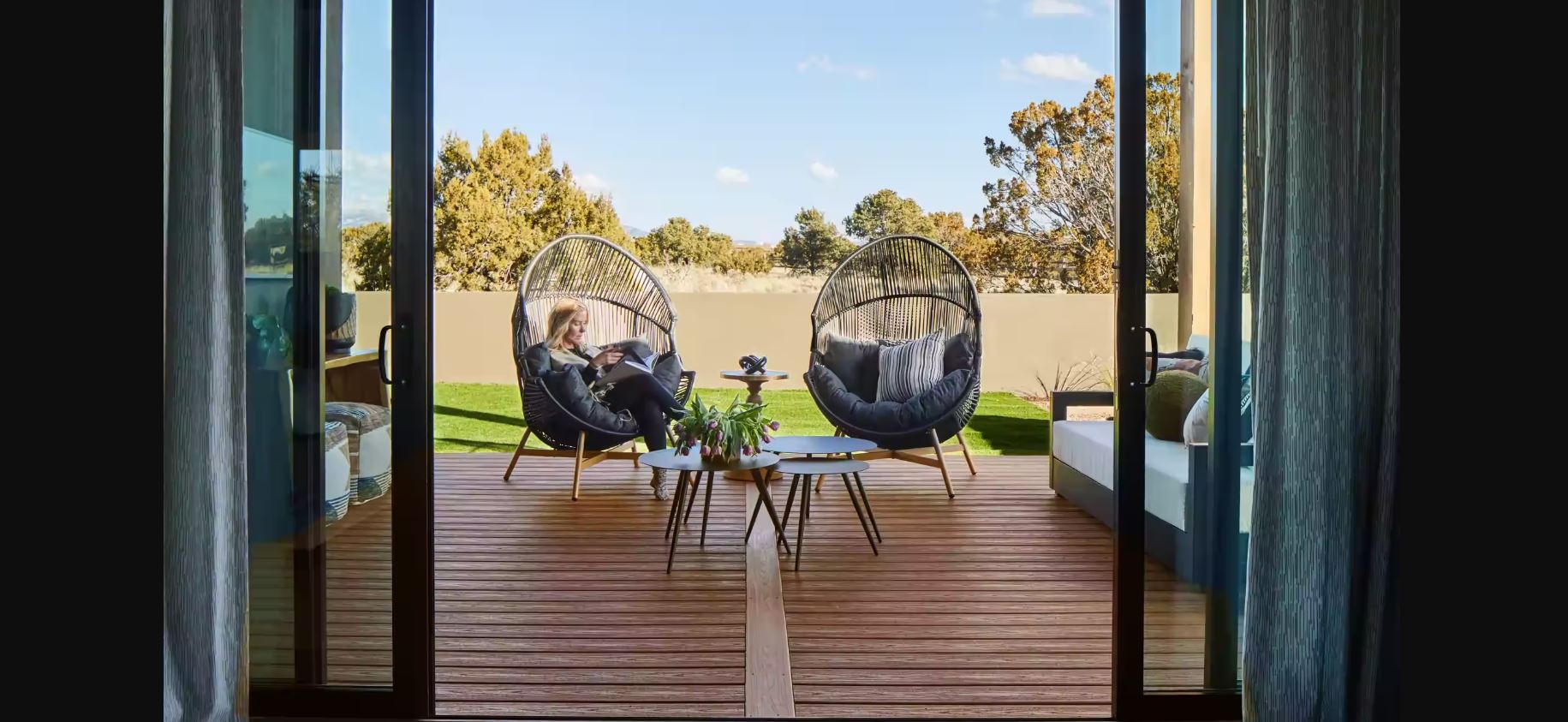
Traditional wood decks present a significant hurdle for technology: they expand and contract with moisture, which can pinch wires and loosen integrated sensors. Trex Transcend and the newer 2026 lines offer a dimensionally stable surface. Because these boards are engineered, they allow for precision-milled "pockets" where sensors and pop-up outlets can be flush-mounted. Furthermore, the move toward Trex Transcend Lineage, which features heat-mitigating technology ensures that the hardware and the humans using the deck stay cool even when the "Smart Climate" systems aren't active.
Intelligent Illumination: The 2026 Lighting Revolution
In years past, outdoor lighting was binary: it was either on or off. In 2026, the "Smart Deck" utilizes Layered Adaptive Lighting. This involves using different "temperatures" and intensities of light to define the deck’s functions.
Automated Zoning and Scenes
Through integration with platforms like Apple Home, Google Home, and specialized Trex LightHub controllers, homeowners can now program "Scenes":
- The "Culinary Scene": When the smart grill is ignited, the task lighting over the outdoor kitchen increases to 100% brightness with a cool-white hue (4000K) for maximum visibility.
- The "Lounge Scene": As sensors detect movement near the seating area, the perimeter lights dim to a warm 2200K amber glow, mimicking candlelight.
- Security Integration: If an outdoor security camera detects an unrecognized person after midnight, the entire deck can flash or turn to 100% brightness instantly, integrated with the home’s alarm system.

High-Fidelity Living: The Sonic Landscape
The days of "carrying out a Bluetooth speaker" are over. In 2026, sound is treated as a structural element. The "Smart Deck" features Omnidirectional Audio Ecosystems that provide a "blanket of sound" rather than a single loud source.
Spatial Audio Outdoors
Modern outdoor sound systems are now being integrated directly into Trex joists and railing posts. By using "under-deck" subwoofers and "bollard" speakers that match the deck’s color palette (such as Island Mist or Toasted Rose), the technology disappears into the architecture.
- Multi-Stream Capability: On a large Trex deck, the kids can be in the "Hot Tub Zone" listening to their playlist via directional speakers that minimize sound bleed, while adults at the dining table enjoy a podcast.
- Acoustic Calibration: Using AI-driven calibration, these systems can "map" the deck’s layout, adjusting the output to account for the lack of walls, ensuring that the bass is punchy but doesn't disturb the neighbors, a key concern in 2026's denser suburban developments.
- Predictive Heating: Linked to local weather APIs, the deck’s heating system can "pre-heat" the seating area if the owner’s calendar shows an "Outdoor Dinner" event and the temperature is forecast to be below 65°F.
- Occupancy Sensors: To save energy, smart heaters only activate when they detect "heat signatures" (people) in specific zones.
- The Smart Pergola: Built on Trex-reinforced posts, these pergolas feature louvers that track the sun’s angle throughout the day to maximize shade. If the internal "Deck Thermistor" detects the surface temperature rising above a set threshold, it triggers a "Dry Mist" system micro-droplets that evaporate before they even hit your skin, cooling the air by up to 25 degrees.
The "Work-From-Deck" Infrastructure
With the "Hybrid Work" model fully solidified in 2026, the smart deck has become the ultimate home office. This requires a level of connectivity that traditional decks simply couldn't support.
Connectivity and Power
- Integrated Power Hubs: Trex decks now often include "Pop-up Power Towers." These are weather-sealed cylinders hidden in the deck boards that, when tapped, rise to reveal USB-C PD (Power Delivery) ports capable of charging high-end laptops.
- Outdoor Wi-Fi 7 Mesh: To support 8K video conferencing and lag-free streaming, tech-enabled decks incorporate weather-proof Wi-Fi 7 nodes hidden inside Trex post caps. This ensures that the backyard has a stronger signal than the living room.
- Anti-Glare Tech: Smart decks are now being designed with "automated shade sails" that deploy specifically to block glare on laptop screens based on the time of day, tracked via GPS coordinates.
- Moisture and Structural Alerts: Sensors can detect if water is pooling in the substructure or if a joist is under undue stress, sending an alert to the homeowner’s phone before a problem becomes visible.
- Automated Cleaning: While Trex is low-maintenance, 2026 luxury decks often integrate "under-rail" sprayers that can be activated via app to rinse off pollen or dust, keeping the deck pristine for the next guest.
The New Standard of Luxury
The "Smart Deck" of 2026 is a masterclass in hidden complexity. It provides a sanctuary that is as technologically advanced as a modern cockpit, yet as relaxing as a forest glade. By leveraging the strength and beauty of Trex as the foundational material, homeowners are creating spaces that are not only beautiful but are "intelligent" enough to care for their occupants. As "Outdoor Convenience" becomes the primary metric for home value, the integration of lighting, sound, climate, and connectivity is no longer an "upgrade" it is the new expectation. The deck has officially evolved from a wooden platform into a sophisticated, connected ecosystem.