

Advanced Insulation for High-Performance Homes
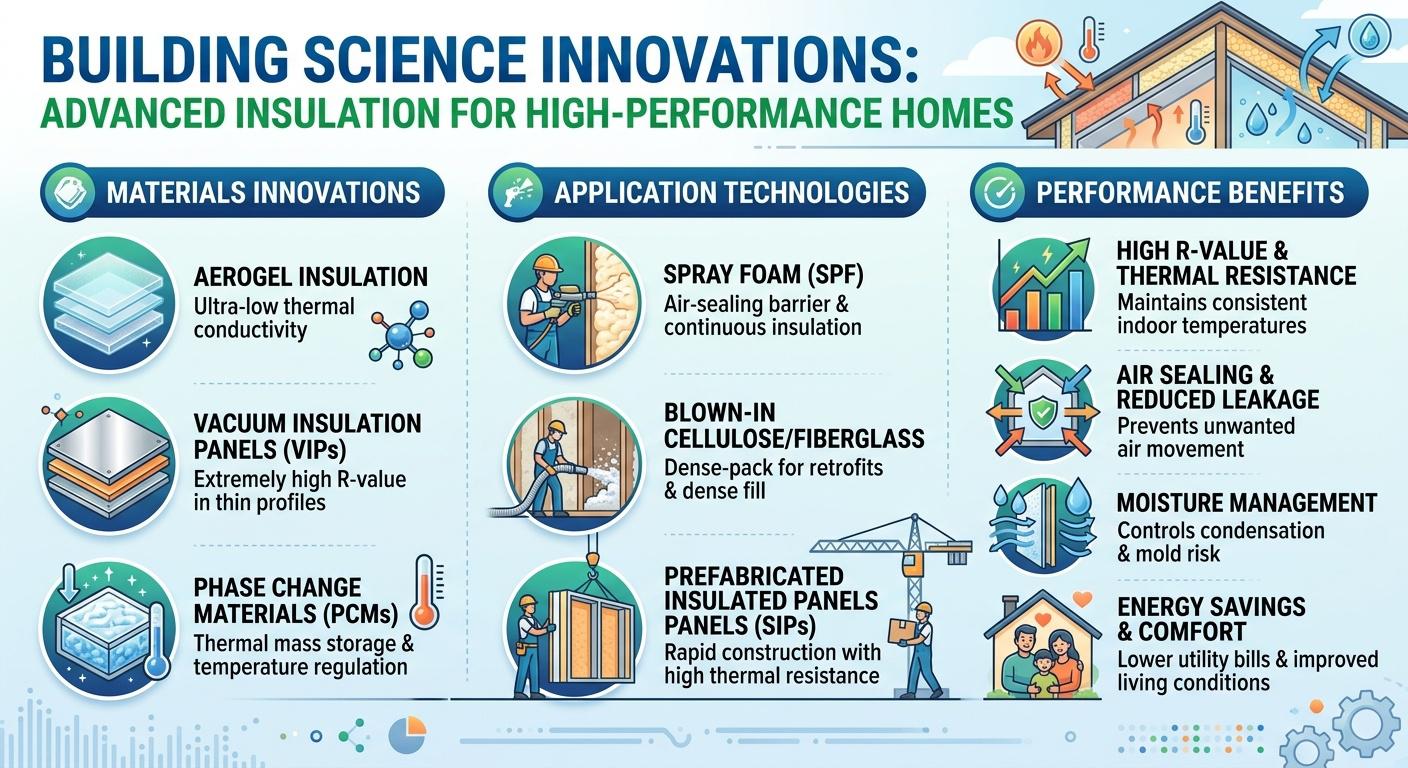
Building Science Innovations: Advanced Insulation for High-Performance Homes
For homeowners, builders, and design-build contractors across Massachusetts, managing the indoor climate is a complex, year-round challenge. The New England climate is notorious for its dramatic, cyclical shifts, demanding high-performance, high-output heating during freezing winters, and efficient, moisture-conscious cooling throughout humid summers. Historically, residential thermal control relied on relatively basic building science principles: stuffing fiberglass batts into wall cavities, stapling vapor barriers, and hoping for the best.
However, modern building science has evolved exponentially. Today, achieving true energy efficiency, indoor environmental quality, and long-term structural longevity requires looking at a residential property as an interconnected, holistic system, a concept known as the "house-as-a-system" approach. Modern thermal control is no longer confined strictly to the hidden insulation cavities behind drywall. Instead, it extends from advanced spray polyurethane foams and radiant barriers to high-efficiency window glazing, continuous exterior insulation, and even the architectural choices made on external living spaces.
By understanding and implementing the latest insulation innovations, New England builders and property owners can significantly reduce carbon footprints, slash monthly utility overhead, and enhance overall structural durability. Furthermore, leading building material providers recognize that premium exterior elements, such as high-performance composite decking and advanced railing systems like Trex Transcend, Trex Select, and Trex Signature, play a vital role in protecting and complementing a home's overall thermal efficiency envelope.
The Evolution of Building Science in New England
Massachusetts boasts some of the most stringent energy codes in the United States, driven largely by the state’s aggressive commitment to reducing greenhouse gas emissions and achieving net-zero building goals by 2050. The adoption of the Ninth and upcoming Tenth Editions of the Massachusetts State Building Code (780 CMR), alongside localized base and stretch energy codes, has fundamentally altered residential construction. To meet these rigorous standards, modern construction practices have shifted focus from simple, nominal R-value (thermal resistance) metrics to advanced air-sealing, managed vapor diffusion, and continuous exterior insulation strategies.
In traditional framing setups, thermal bridging occurs when heat passes directly through non-insulated structural elements, such as wooden wall studs, plates, and headers. Because solid wood has a much lower R-value than insulation, these framing members act as thermal highways, letting heat escape in the winter and infiltrate in the summer. You can check our Comprehensive Guide to Home Insulation for more details.
While traditional framing methods inadvertently encourage this heat loss and contribute to problems like ice damming, modern building science solves this by wrapping the structure in a continuous layer of insulation. This continuous exterior insulation creates a complete thermal break, drastically reducing energy transfer, stabilizing indoor temperatures, and preventing the escaping heat that causes roof snow to melt and form ice dams.
Next-Generation Insulation Materials Redefining the EnvelopeWhen selecting insulation materials for a high-performance new build or a comprehensive historic retrofit, contractors are moving far beyond traditional fiberglass rolls. Several innovative options have taken center stage due to their superior thermal performance, environmental safety, and structural benefits.- High-Performance Spray Polyurethane Foam (SPF)
Spray foam has revolutionized residential air-sealing and thermal boundary alignment. Unlike traditional batts, which are prone to sagging and improper installation, liquid polyurethane expands rapidly upon application. This creates a custom-fit thermal barrier that completely fills irregular framing cavities, electrical penetrations, plumbing chases, and rim joists.- Closed-Cell SPF: Offers an exceptionally high R-value per inch (typically ranging from 6.5 to 7.0), acts as a certified vapor retarder, and significantly adds to the racking strength of the wall assembly. It is ideal for damp Massachusetts basements, unvented crawl spaces, and exterior walls subjected to severe weather exposure.
- Open-Cell SPF: Yields an R-value of roughly 3.5 to 4.5 per inch. It provides excellent soundproofing characteristics and a cost-effective thermal barrier, making it perfect for interior partition walls, floor assemblies, and unvented attic roof lines.
- Aerogel and Vacuum-Insulated Panels (VIPs)
Once reserved exclusively for aerospace engineering and industrial applications, aerogels represent the absolute pinnacle of current insulation technology. Known colloquially as "frozen smoke," silica aerogel provides unmatched thermal resistance within ultra-thin profiles.
Similarly, vacuum-insulated panels offer incredibly high R-values (frequently exceeding R-30 per inch) without requiring thick, deep wall cavities. These advanced materials present an excellent, albeit premium, solution for historic renovations in heritage-rich cities like Boston, Salem, and Concord, where preserving exact exterior architectural dimensions and interior historic trim is legally mandated or aesthetically vital.- Advanced Cellulose and Eco-Friendly Loose-Fill
For eco-conscious builders, blown-in cellulose treated with natural borates offers exceptional flame resistance, pest deterrence, and impressive dense-pack thermal performance. Made mostly from recycled newspapers, this material can be tightly packed into old wall spaces without damaging historic exteriors or spread loosely across attic floors to create a smooth layer of insulation that reduces heat loss.

Integrating Structural Elements with Thermal Design
An energy-efficient home is only as strong as its weakest link. While high-tech insulation guards the interior wall cavities, true thermal control must be supported by premium window assemblies and high-performance exterior structural materials. To see how these elements function together, consider their specific performance characteristics:- Closed-Cell Spray Foam
- Primary Benefit: High R-value per inch, integrated air/vapor barrier, and added structural rigidity.
- Best Application: Basements, unvented crawl spaces, rim joists, and exposed wall cavities.
- Blown-In Cellulose
- Primary Benefit: Eco-friendly composition, dense packing that eliminates interior voids, and high fire and pest resistance.
- Best Application: Deep attic floors, retrofits of historic lath-and-plaster walls, and acoustic dampening between floors.
- Low-E Multi-Pane Windows
- Primary Benefit: Reflects radiant heat away from the home, eliminates drafts, and uses heavy gas fills to reduce convective currents.
- Best Application: Living rooms, large window walls, and south-facing facades to carefully manage solar heat gain.
- High-Performance Composites
- Primary Benefit: Extremely low thermal absorption, completely moisture-impervious, and entirely resistant to rot, warping, or splitting.
- Best Application: Exterior decks, porches, and transitional zones located directly adjacent to the home's foundation.
Windows represent a significant point of vulnerability for thermal bridging and radiant energy transfer. Modern multi-pane windows utilizing argon or krypton gas fills, combined with specialized low-emissivity coatings, work seamlessly with your insulation package. They reflect infrared light away during hot summer months to ease the cooling load while trapping radiant heat indoors throughout the bitter winter.
Outdoor Transitions: Aligning Insulation Innovations with Composite Solutions
True thermal mastery looks beyond the interior drywall and sheathing. The exterior living spaces immediately adjacent to a home’s foundation and walls, such as porches, verandas, and decks, act as critical buffer zones against environmental extremes. Incorporating high-quality, low-conduction materials on the outside reduces the overall microclimatic stress placed on the home’s main thermal envelope.
When building or renovating an outdoor living area to complement an energy-efficient home, wood-plastic composites offer undeniable advantages over exotic or traditional pressure-treated hardwood lumber. Traditional wood decks absorb significant amounts of seasonal moisture. In New England, this moisture undergoes rapid freeze-thaw cycles, leading to structural warping, splitting, and checking. More importantly, damp wood framing can transfer moisture back toward the home’s sill plate, rim joist, and foundation walls, compromising the interior insulation and creating a breeding ground for mold.
By contrast, using a high-performance composite deck establishes a hydrophobic barrier. Because it repels moisture, the underlying sub-structure stays dry, preventing rot and blocking harmful moisture from traveling into the home's rim joist. This protects the integrity of your interior insulation and safeguards the main thermal envelope.
Integrating premium composite solutions, alongside structural architectural accents like a Trex railing system, establishes a resilient, low-maintenance exterior barrier. High-performance composite decking resists moisture absorption and rot, ensuring that the transitional zones of a property remain structurally sound for decades without requiring chemical stains, sealers, or heat-absorbing dark finishes that contribute to localized heat-island effects around the home's windows and doors.
The Trex Product Hierarchies: Selecting the Right Profile
When planning an exterior living space to match a high-end, well-insulated interior build, understanding the product tiers available within leading composite ecosystems is essential for both performance and design continuity:
Trex Transcend
As the pinnacle of durability and aesthetics, the Transcend line features a proprietary, heavy-duty, three-sided cap shell that handles intense New England weather with ease. Its deep, ultra-realistic wood-grain patterns and luxury color palettes provide a timeless aesthetic that pairs perfectly with premium, high-efficiency custom home designs.
Trex Select
Offering a streamlined, high-performance option, this line brings the reliable, core benefits of composite technology, such as rot, warp, and fade resistance, at an accessible price point. This makes it perfect for multi-tier decks, secondary porches, or standard residential additions that require long-term durability without premium architectural costs.
Trex Signature
Characterized by sleek, modern profiles and premium material strength, this collection represents the top tier of exterior architectural design. It blends minimalist aesthetics, such as powder-coated aluminum and high-end glass infills, with exceptional structural integrity, making it the premier choice for contemporary, net-zero energy homes with expansive viewscapes.
Completing a high-performance outdoor transition requires matching these decking lines with a durable, code-compliant Trex deck railing system. Incorporating a robust railing system ensures structural safety, strict adherence to local building codes, and visual continuity. This helps homeowners and design professionals create an outdoor space that reflects the same engineering precision, quality, and low-maintenance longevity found within the smart, highly insulated interior walls.

Smart Ventilation and Air Management
A foundational phrase among modern building scientists and certified Passive House builders is "Build tight, ventilate right." When a home successfully utilizes advanced insulation techniques, continuous exterior insulation, and meticulous flashing tapes, the structure becomes virtually airtight. While this stops drafts and slashes energy bills, it also poses a risk: trapping indoor air pollutants, volatile organic compounds, cooking moisture, pet dander, and carbon dioxide.
To maintain pristine indoor air quality and protect the home's structural framing from interstitial condensation without sacrificing thermal efficiency, modern homes must implement dedicated mechanical ventilation systems:- Heat Recovery Ventilators (HRVs): These systems continuously expel stale indoor air while drawing in fresh outdoor air. A specialized internal heat exchanger transfers thermal energy from the outgoing airstream to the incoming airstream, ensuring that fresh air enters the living spaces near room temperature, preserving the home's thermal stability.
- Energy Recovery Ventilators (ERVs): Similar in operation to HRVs, ERVs go a step further by transferring both heat and moisture. In a humid Massachusetts summer, an ERV strips latent moisture from incoming outdoor air before it enters the living space. This significantly reduces the latent cooling workload on air conditioning systems and protects structural insulation cavities from moisture accumulation and vapor drive issues.
Best Practices for Massachusetts Contractors and Builders
Implementing these advanced insulation and exterior innovations successfully requires strict adherence to localized building science and regional construction management principles:- Prioritize the Rim Joist Assembly: The rim joist is historically one of the most significant sources of energy loss and air infiltration in New England homes. Utilizing closed-cell spray polyurethane foam in this zone seals the complex framing connections and prevents cold air from short-circuiting the floor insulation at the foundation level.
- Design and Account for Seasonal Vapor Drive: In Climate Zone 5 (which encompasses most of Massachusetts), vapor drive changes direction based on the season. In the winter, moisture moves from the warm, humid interior toward the cold, dry exterior; in the summer, the reverse occurs. Utilizing smart vapor retarders (materials that change permeance based on relative humidity) allows the wall assembly to dry out in both directions, preventing dry rot. You can check out our guide on When to Install Home Insulation for additional guidance.
- Leverage Local Utility Rebates and Incentives: The Mass Save program offers extensive, highly lucrative financial incentives, equipment rebates, and 0% HEAT Loan financing options for homeowners and builders who upgrade their insulation, perform comprehensive air sealing, or transition to high-efficiency heat pump systems. Staying deeply updated on these shifting incentive structures adds immediate, tangible financial value to your clients during the bidding and pre-construction phases.
Designing a Future-Proof Property
Embracing insulation innovations is no longer just a matter of basic compliance with local building codes; it is about future-proofing residential investments against unpredictable energy markets, volatile fossil fuel pricing, and shifting climate patterns. From advanced spray foams that create airtight structural envelopes to high-performance, gas-filled windows that carefully control solar heat gain, modern home building demands rigorous, precision engineering.
By viewing the home as an integrated, holistic system, you ensure that high-efficiency interior choices are supported, framed, and protected by equally durable exterior building materials. Finishing your property with a premium Trex deck railing system and high-end composite boards ensures your outdoor living space matches the resilience, elegance, low-maintenance profiles, and longevity of your high-tech interior.
Optimize Your Next Project with Arlington Coal & Lumber Company
Ready to optimize your next residential building or remodeling project? Partner with a trusted regional expert to source industry-leading insulation, premium engineered lumber, and top-tier exterior composite materials.
Visit Arlington Coal & Lumber Company today to consult with our experienced building material specialists, explore our comprehensive contractor-grade product offerings, and secure the high-performance products needed to build beautiful, energy-efficient spaces designed to last a lifetime. We proudly serve homeowners, framing crews, and general contractors across Wilmington, Burlington, Sudbury, Hudson, and Chelmsford, MA.
