

Quiet Comfort: How Insulation Can Soundproof Your Home
Quiet Comfort: How Insulation Can Soundproof Your Home
The Science of Silence: Understanding Sound Transmission
To appreciate how insulation functions as a sound barrier, one must first understand the physics of sound transmission. Noise permeates a room through two primary mechanisms:- Airborne Noise: Sound waves traveling through the air (e.g., traffic, voices, music).
- Impact Noise: Vibrations traveling directly through the structural elements of the building (e.g., footsteps, door slamming, washing machine vibrations).
STC (Sound Transmission Class): This measures how effectively a partition blocks airborne sound. A standard hollow wall has an STC of roughly 33, which allows normal speech to be clearly heard. A truly "quiet" wall aims for an STC of 45 or higher.
NRC (Noise Reduction Coefficient): This measures how much sound a material absorbs rather than reflects.
How Insulation Dampens Noise
Insulation improves the STC rating of a wall assembly by replacing the empty, resonant air space with material that absorbs acoustic energy. The insulation fibers create a tortuous path for sound waves, trapping air and breaking up the energy as it attempts to pass through. This friction converts the sound energy into minute amounts of heat, effectively damping the noise. Efficacy, however, varies significantly based on material density and composition. (For a broader look at materials, consult our Comprehensive Guide to Home Insulation.)Comparative Analysis: Top Insulation Materials for Soundproofing
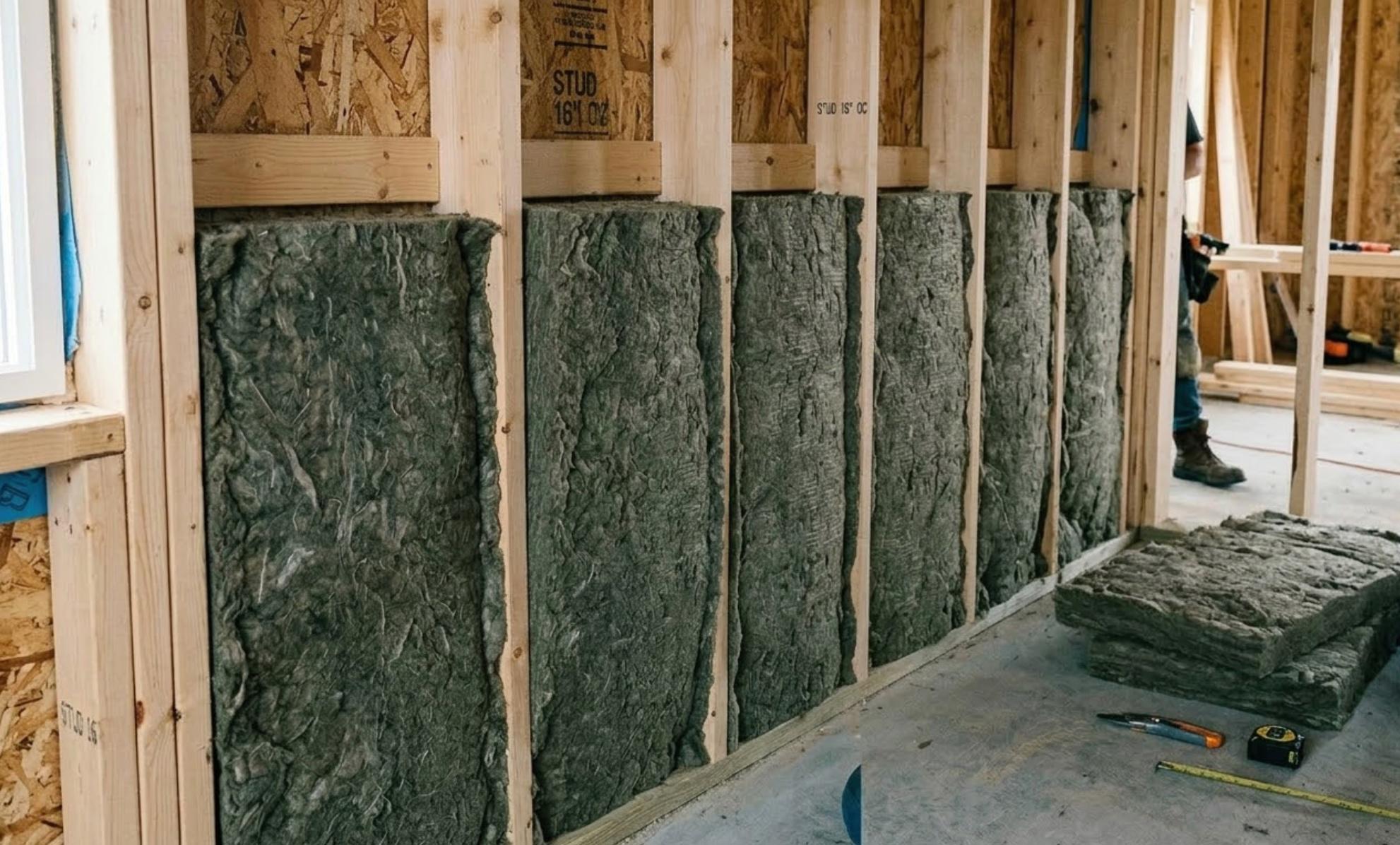
- Mineral Wool (Rock Wool)
Performance: Widely considered the gold standard for residential soundproofing. It is extremely dense and heavy, providing superior sound absorption compared to lighter materials.
Additional Benefits: Naturally fire-resistant and hydrophobic (repels water).
Best For: Media rooms, bedrooms, and partition walls between apartments or townhomes.
- Cellulose
Performance: Typically blown in, it packs tightly around pipes, wires, and electrical boxes, leaving fewer air gaps. It creates a dense, monolithic barrier that is effective at stopping leaks.
Composition: Made from recycled paper products treated with borate for fire resistance.
Best For: Retrofitting existing walls where removing drywall is not an option.
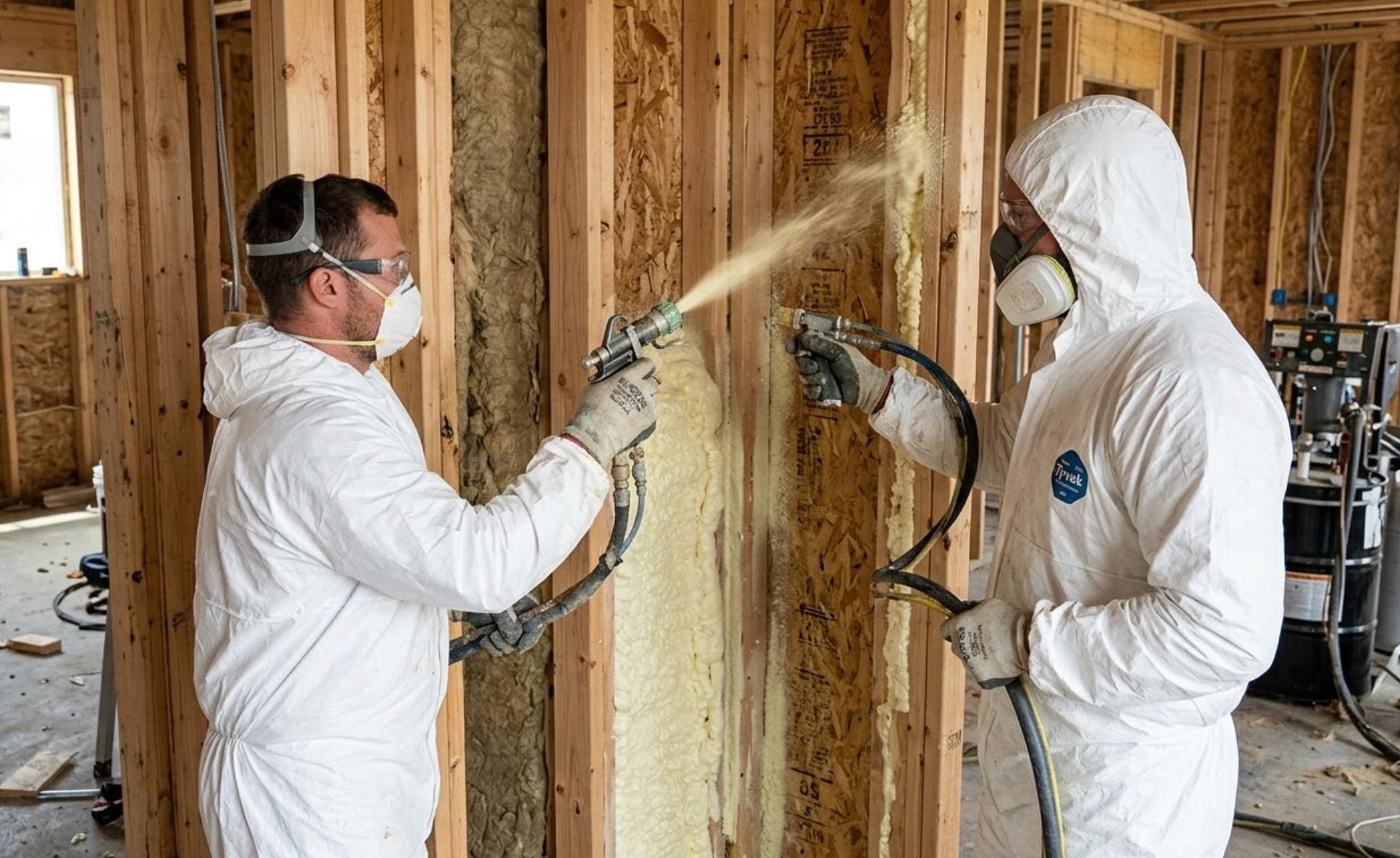
- Open-Cell Spray Foam
Performance: Expands to fill every crevice, stopping airborne noise leaks significantly. Its spongy texture absorbs sound waves.
Caution: Avoid closed-cell foam for soundproofing; its rigid, high-density structure can actually transmit vibrations.
Best For: Exterior walls and vaulted ceilings where a strong thermal seal is also required.
- Fiberglass
Performance: The most common and cost-effective insulation. Standard batts are less dense than mineral wool. "Acoustic" fiberglass batts offer better performance but generally lag behind mineral wool in low-frequency blocking.
Best For: Budget-conscious projects or general-purpose partition walls.
Strategic Application: Where to Insulate
To maximize return on investment, move beyond a "whole house" approach and target specific zones based on the type of noise generated. (If you are considering attic applications, review our guide: Attic Insulation Uncovered: Your Blueprint for a Cozy Home). Exterior Walls Noise Sources: Traffic, sirens, environmental noise. Strategy: Focus on airtight solutions to prevent airborne noise infiltration. Open-cell spray foam or dense-pack cellulose are ideal because they seal gaps and cracks more effectively than standard batts. Interior Partitions Noise Sources: Televisions, conversation, and plumbing sounds. Strategy: Prioritize walls surrounding high-volume areas (bathrooms, laundry rooms, media rooms, and home offices). Mineral wool batts are the preferred choice due to their high density and friction-fit installation. Floor & Ceiling Assemblies Noise Sources: Impact noise (footsteps, dropping objects) and vibration. Strategy: Pack floor joists with insulation to eliminate the "drum effect" created by hollow spaces. This is crucial in multi-story homes to dampen the sound of walking overhead. (For specialized areas, see our tips onGarage Ceiling Insulation andInsulating Beneath Your Basement Slab.)The Silent Enemy: Flanking Noise
Even with the highest quality insulation, a room may still be noisy. This is usually due to flanking noise, sound that bypasses the insulated wall entirely by finding alternative pathways. Think of a soundproof room like a bucket holding water; even a pinhole leak renders the bucket ineffective. Sound follows a similar pattern, gravitating towards the least resistance path. Common Flanking Paths and Solutions: HVAC Ducts: Metal ducts carry voices and noise from one room to another. Solution: Use lined ducts or install acoustic baffles inside the ductwork. Electrical Outlets: Outlets on opposite sides of a wall often share the same stud cavity, creating a direct tunnel for sound. Solution: Stagger the outlets so they are not back-to-back, and install acoustic putty pads behind the electrical boxes. Doors: A standard interior door is hollow and has a gap at the bottom. Solution: Upgrade to solid-core doors and install automatic door sweeps that seal the gap when the door is closed.Installation Best Practices
The performance of acoustic insulation is heavily dependent on installation quality. A sloppy installation can reduce the STC rating by up to 50%. (To time your project effectively, check ourSeasonal Tips for Optimal Performance). The "Fit," Not "Stuff" Rule: Insulation works by trapping air within its fibers. If you compress a 6-inch batt into a 3-inch cavity, you squeeze out the air pockets, destroying its acoustic (and thermal) value. Batts should fit snugly but must maintain their loft. Cut Around Obstacles: Do not simply stuff insulation behind wires or pipes. Split the bat down the middle or cut notches to accommodate obstructions, ensuring the material remains flat and uncompressed. Acoustic Sealant: Before installing drywall, apply a bead of acoustic sealant (caulk) along the top and bottom plates of the wall frame. This seals the perimeter against airborne sound leaks.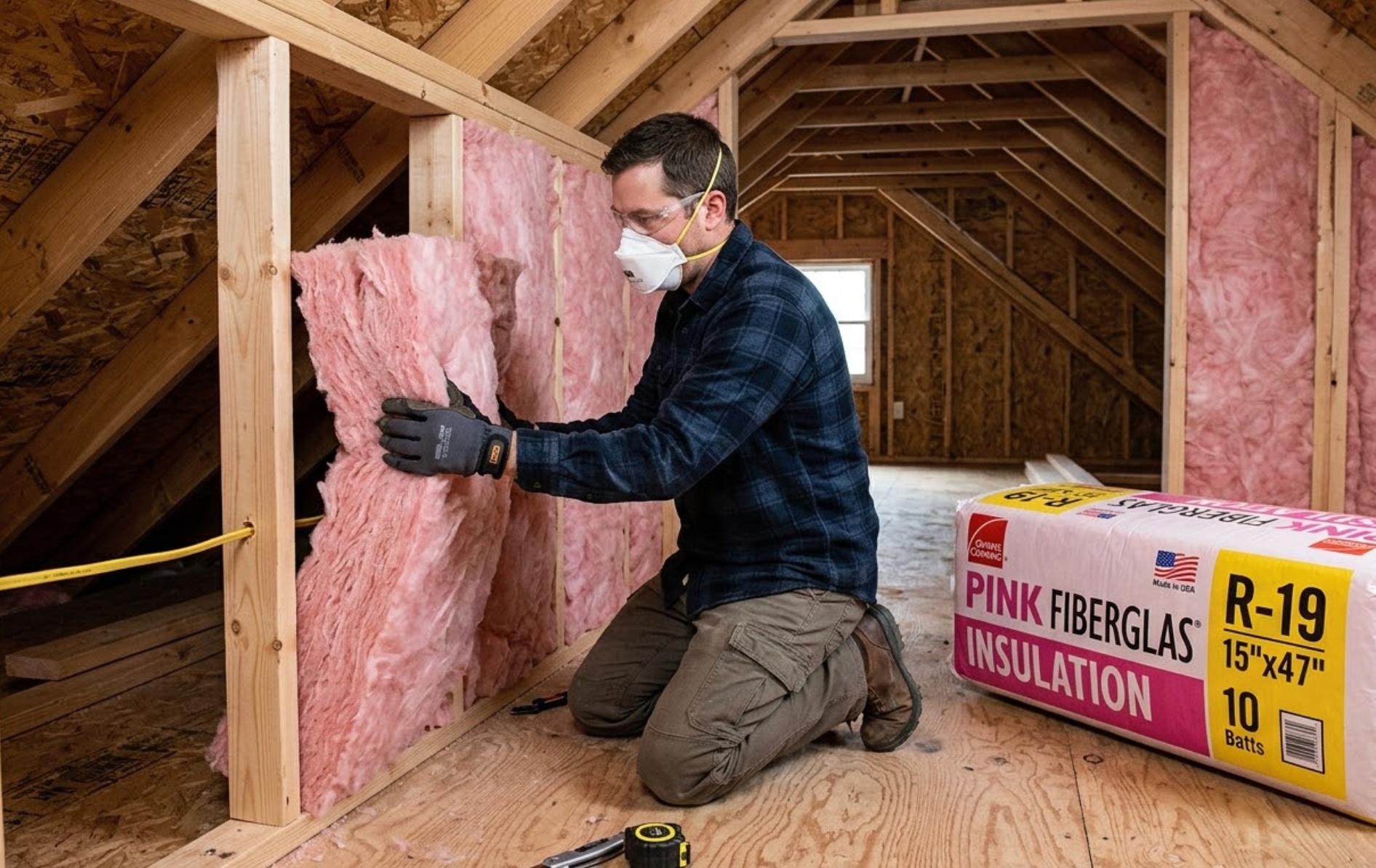
New Construction vs. Retrofitting
The approach to soundproofing changes drastically depending on the stage of construction. New Construction (The Ideal Scenario) This offers the most flexibility. Beyond insulation, you can utilize decoupling. This method involves using resilient channels (metal rails) to separate the drywall from the wooden studs. This step breaks the vibration path, preventing sound from traveling through the frame of the house. Retrofitting (The Challenge) If the drywall is already up, your options are limited but effective: Blow-in Cellulose: Contractors can drill small holes near the top of the wall and pump in dense-pack cellulose. This adds mass and absorbs resonance without requiring a full demolition. Green Glue and Double Drywall: You can apply a viscoelastic damping compound (like Green Glue) to a new sheet of drywall and screw it directly over the existing wall. This "sandwich" layer dissipates sound vibrations incredibly effectively.Debunking Soundproofing Myths
In the pursuit of quiet, many homeowners fall for "hacks" that offer little to no acoustic value. Myth: Egg Cartons Reality: Egg cartons may slightly reduce echo inside a room, but they have zero mass and will not stop sound from entering or leaving. They are also a significant fire hazard. Myth: Soundproof Paint Reality: While these paints exist, they add negligible mass to a wall. The acoustic improvement is usually imperceptible to the human ear. Myth: Carpet on Walls Reality: Like egg cartons, this reduces internal echo (reverberation) but does not increase the STC rating of the wall. It will not block traffic noise or a loud television next door. The Cost of Quiet Soundproofing is often viewed as an added expense, but it is more accurately viewed as a value multiplier. While upgrading from standard fiberglass to mineral wool may cost 20–30% more in material costs for those specific walls, the labor cost remains largely the same. The return on this investment is immediate: deeper sleep, increased productivity in home offices, and the ability for different generations to coexist in one home without friction. In a noisy world, the presence of silence is perhaps the most sophisticated architectural feature a home can possess. (If you suspect your current insulation needs attention, here are 5 Key Signs to Watch For in Home Insulation Upgrade.) Contact Arlington Coal & Lumber Company today. We're here to help you find the ideal insulation and building materials to bring a next-level impact to your project. We proudly serve Arlington, Wilmington, Burlington, Sudbury, and Chelmsford, Massachusetts. Contact us today to schedule your free consultation.