

How to Build a High-Performance Smart Deck
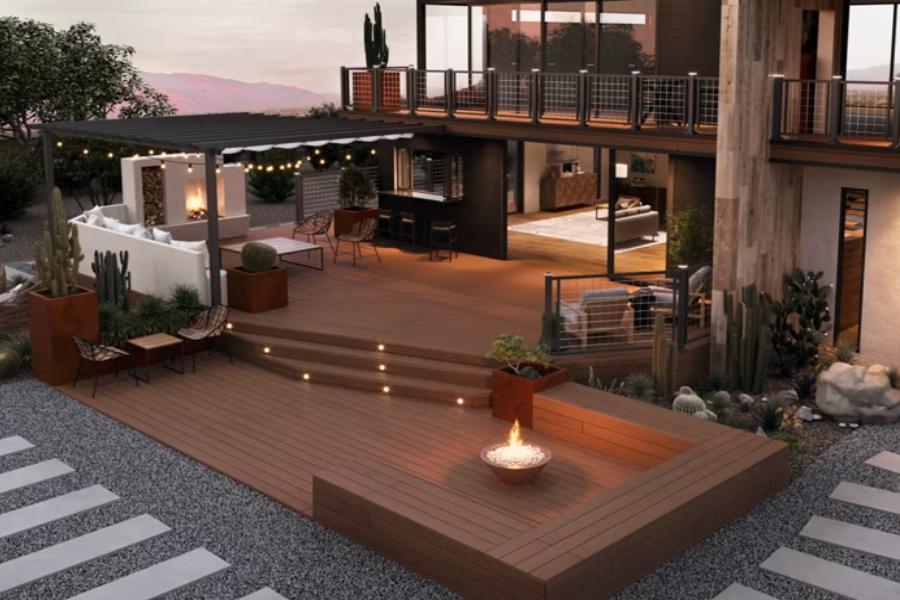
How to Build a High-Performance Smart Deck: Lighting, Climate Control, and Culinary Excellence
In the evolving landscape of North American residential design, the backyard has undergone a radical metamorphosis. What was once a secondary patch of lawn has transitioned into a primary living area, a "great room" without walls. Today’s homeowners are no longer satisfied with a simple platform for a charcoal grill; they are looking to replicate the sophisticated comfort and seamless functionality of their interiors in the open air.
Central to this shift is the Smart Deck: a high-performance outdoor environment that integrates advanced technology with premium building materials. For homeowners, builders, and contractors, the challenge lies in merging complex systems, lighting, sound, climate control, and professional-grade appliances with a structural foundation capable of withstanding the elements and the rigors of frequent use. By utilizing industry-leading products like Trex Transcend and Trex Signature, professionals can deliver an outdoor kitchen and entertainment hub that offers ultimate convenience without compromising on style or structural longevity.
The Rise of the Outdoor Kitchen: A National Trend
The outdoor kitchen market in the United States has seen explosive growth, with valuations reaching approximately $9.5 billion in 2025 and projected to surpass $10 billion by the end of 2026. This surge is driven by a fundamental shift in residential philosophy: the outdoor deck is now viewed as a direct extension of the home’s culinary and social footprint.
Beyond simple aesthetics, the demand for "connected living" is the primary catalyst. Modern outdoor kitchens are no longer defined by a standalone grill on a cart; they are modular, smart-enabled ecosystems. From app-controlled rotisseries to integrated Wi-Fi mesh nodes and high-fidelity subterranean sound systems, the "Smart Deck" is becoming the gold standard for luxury residential construction.
Planning the Foundation: Weight and Structural Integrity
Before a single board is laid or an appliance selected, the design must begin with the substructure. A standard residential deck is typically engineered for a live load of 40 pounds per square foot (psf) and a dead load of 10 psf. However, a fully equipped outdoor kitchen, incorporating stone countertops, heavy-duty stainless steel grills, and cabinetry, can easily push the localized load in the "culinary zone" to over 80 psf.
The Critical Role of Substructure and Lumber Quality
While the surface of the deck receives the most attention, its lifespan is entirely dependent on the quality of the framing. For a deck supporting heavy appliances and integrated electronics, standard pressure-treated lumber must be of the highest grade.
Builders should prioritize #1 prime (select) grade Southern Yellow Pine or Douglas Fir for joists and beams. These grades feature tighter growth rings and fewer knots, providing the structural integrity required when drilling through members to run electrical conduits for smart systems.
Furthermore, integrating a deck drainage system, such as Trex RainEscape, is a strategic necessity for smart decks. By diverting water away from the joists, you protect the complex electrical wiring and low-voltage transformers from moisture. This creates a "dry zone" beneath the deck, which can be utilized for additional storage or as a sheltered housing area for sensitive electronic components like amplifiers and smart hubs.
Key Structural Considerations for High-Performance Decks:- Joist Spacing: For areas supporting heavy appliances like wood-fired pizza ovens or ceramic "egg" grills, contractors should reduce spacing to 12 inches on-center to prevent deflection.
- Load Path Management: Heavy components, such as 3cm granite or concrete countertops (averaging 18–20 lbs/sq ft), require a clear load path directly to the beams and posts to prevent structural fatigue.
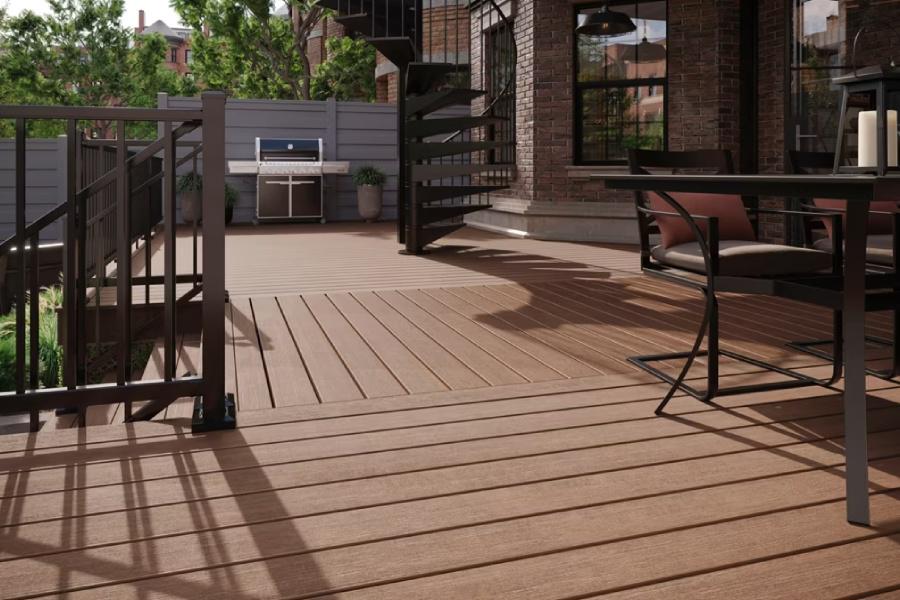
- Material Synergies: Utilizing high-performance composites like Trex Transcend ensures the surface can withstand the concentrated foot traffic and inevitable spills associated with high-end outdoor dining.
Designing the Culinary Hub: Grills, Sinks, and Storage
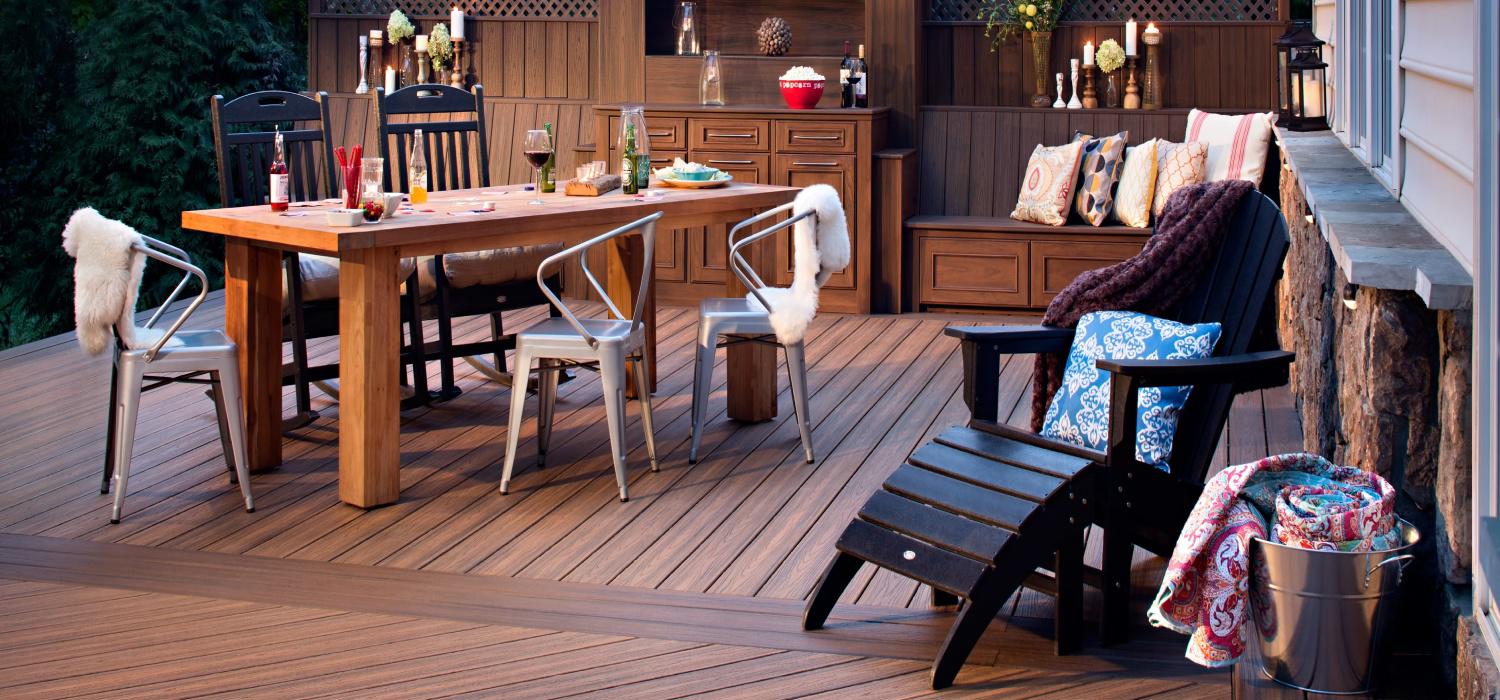
Integrating a full-scale kitchen onto a composite deck requires a meticulous balance of workflow efficiency and thermal safety. The most effective layouts typically follow the "work triangle" principle used in interior design, often manifesting as an L-shaped configuration for space optimization or an island layout for larger entertainment-focused decks.
Heat Management and Thermal Safety
Safety is the paramount concern when placing high-heat appliances on composite surfaces. While products like Trex Transcend are highly resistant to fading and staining, they are not immune to extreme heat.
- Insulated Jackets: Built-in grills must be installed with a manufacturer-approved insulated grill jacket. This prevents direct heat transfer to the surrounding cabinetry and decking, preserving the integrity of the materials.
- Clearance Requirements: To prevent heat accumulation and potential fire hazards, grills should be positioned at least 24 to 36 inches away from combustible walls and railings.
The shift toward permanent outdoor kitchens has birthed a new category of weather-resistant cabinetry. Homeowners now demand full-service stations featuring High-Density Polyethylene (HDPE) or marine-grade stainless steel cabinets. These materials ensure that storage units will not warp, rot, or succumb to insect damage, maintaining the "low-maintenance" promise of the Arlcoal product line. Dedicated pull-out trash bins and weather-sealed drawers for silver and linens are essential for reducing "trips to the house," truly moving the kitchen experience outdoors.
The "Smart" Component: Lighting, Sound, and Climate
The true distinction of a modern deck lies in its technological integration. By automating environmental factors such as lighting, sound, and climate control, homeowners can extend their deck’s usability across all four seasons, a critical selling point in the New England climate.
Electrical Planning for the Smart Ecosystem
A comprehensive smart deck often requires its own dedicated 20-amp circuit to handle the load of refrigerators, ice makers, and charging stations.- GFCI Protection: All outdoor outlets must be GFCI-protected and housed in "in-use" weatherproof covers.
- Conduit Management: Professional builders must ensure "wire spaghetti" is avoided. Housing wires in UV-rated PVC conduits protects connections from degradation and prevents local wildlife from damaging the infrastructure.

Automated Lighting and Ambiance
Lighting is the most impactful way to enhance both safety and ambiance. Contemporary systems like Trex Deck Lighting offer Wi-Fi-controlled options that allow homeowners to schedule "scenes" or dim lights via smartphone.
- Layered Lighting: Separate safety lighting (stair risers and perimeter) from ambient accent lights (post caps and joist-mounted downlights).
- Railing Integration: Using Trex Signature railing allows for the seamless inclusion of post-cap lights. The hollow aluminum posts act as internal conduits, hiding wire runs for a clean, professional finish that is impossible with traditional wood railings.
The greatest challenge to outdoor living is the weather. Smart decks tackle this challenge through two primary innovations:- Heat-Mitigating Decking: Products like Trex Transcend Lineage feature heat-mitigating technology designed to keep the surface cooler under the intense summer sun, making it comfortable for bare feet and pets.
- Integrated Heating: High-efficiency infrared heaters, mounted to pergolas or under-deck ceilings, provide targeted warmth during the cooler months of October and November, ensuring the deck remains a viable living space for 8–10 months of the year.
The railing serves as the "frame" for your outdoor kitchen and frequently defines the visual character of the project. For a high-tech, modern aesthetic, Trex Signature Cable Railing or X-Series options offer unobstructed views and a minimalist profile that perfectly complements stainless steel appliances. For those seeking a more robust, architectural look, the Trex Transcend railing system provides the weight and presence necessary to anchor a large-scale deck project.
Future-Proofing Your Outdoor Investment
Building a Smart Deck is a significant investment in both property value and lifestyle quality. According to recent real estate data, a high-quality composite deck can offer a return on investment (ROI) of over 65%, with that figure increasing when a functional outdoor kitchen is included.
By combining the structural reliability of premium lumber with the durability of composite products and the convenience of modern technology, you create a space that is as functional as it is beautiful. Whether you are a homeowner planning a private retreat or a contractor looking to offer the "ultimate backyard" to your clients, the focus must remain on three pillars: structural integrity, smart integration, and high-performance materials.
The backyard is no longer just a patch of grass; it is the new center of the home. Embracing these trends ensures your outdoor space remains relevant, convenient, and luxurious for decades to come.
Partner with the Experts
Are you ready to optimize your next project for maximum durability and moisture resistance?
Contact the experts at Arlington Coal & Lumber Co. today. Explore our full inventory of premium lumber, high-performance insulation, advanced railing systems, and the complete Trex decking ecosystem. We proudly serve homeowners and contractors across Wilmington, Burlington, Sudbury, and Chelmsford, MA. Let’s build something that lasts.
