Loading... Please Wait

Weather-Resistant Deck Solutions for Diverse US Clim
News & Articles

Posted by Admin on

Designing Decks for All Seasons: Weather-Resistant Solutions for Diverse US Climates

The American landscape is a study in meteorological extremes. From the sub-zero winters of the Upper Midwest to the salt-spray humidity of the Gulf Coast and the kiln-like heat of the Arizona desert, "the outdoors" represents an entirely different environment depending on your zip code. For homeowners, this geographic diversity poses a significant architectural challenge: How do you build an outdoor living space resilient enough to survive local extremes while remaining comfortable enough to enjoy year-round?

Designing for longevity requires moving beyond mere aesthetics. It necessitates a strategic marriage of high-performance materials, specifically advanced composites like Trex, and climate-specific engineering. If you are new to this material, you can explore Trex composite decking: everything you need to know to understand the fundamental benefits of wood-plastic alternatives.

  1. The North & Midwest: Conquering the Freeze-Thaw Cycle
In the northern half of the country, the primary enemy is moisture in its most destructive form: ice. States from Montana to Massachusetts experience the "freeze-thaw cycle," where temperatures fluctuate above and below freezing daily during the shoulder seasons.

The Problem: Wood’s Structural Memory

Traditional wood decking is naturally porous. During autumn rains, wood fibers act like a sponge, soaking up water deep into the core of the board. When the first deep freeze hits, that trapped water expands by roughly 9% in volume. This expansion exerts incredible internal pressure, literally tearing the wood fibers apart from the inside out. Over a few seasons, this leads to "checking" (deep cracks), splintering, and eventually, catastrophic structural rot.

The Trex Solution: Engineering Stability

Trex composite decking solves this through total encapsulation. Because the wood fibers are encased in high-density polyethylene (recycled plastic), the boards are essentially hydrophobic. Even when buried under three feet of snow for months, the core remains dry and stable. By eliminating water absorption, Trex removes the catalyst for the freeze-thaw expansion that causes wood decks to fail prematurely.

Design Strategies for the North:

The "Pitch" for Snow Melt: Proper drainage is critical. Ensure a slight pitch (at least 1/8 inch per foot) away from the house. This prevents "ice damming" at the ledger board.

Comprehensive Joist Protection: While Trex boards are immune to rot, the wooden sub-frame remains vulnerable. Applying a butyl-based flashing tape, such as Trex Protect, is vital to prevent snowmelt from sitting in screw holes where it could freeze and expand.

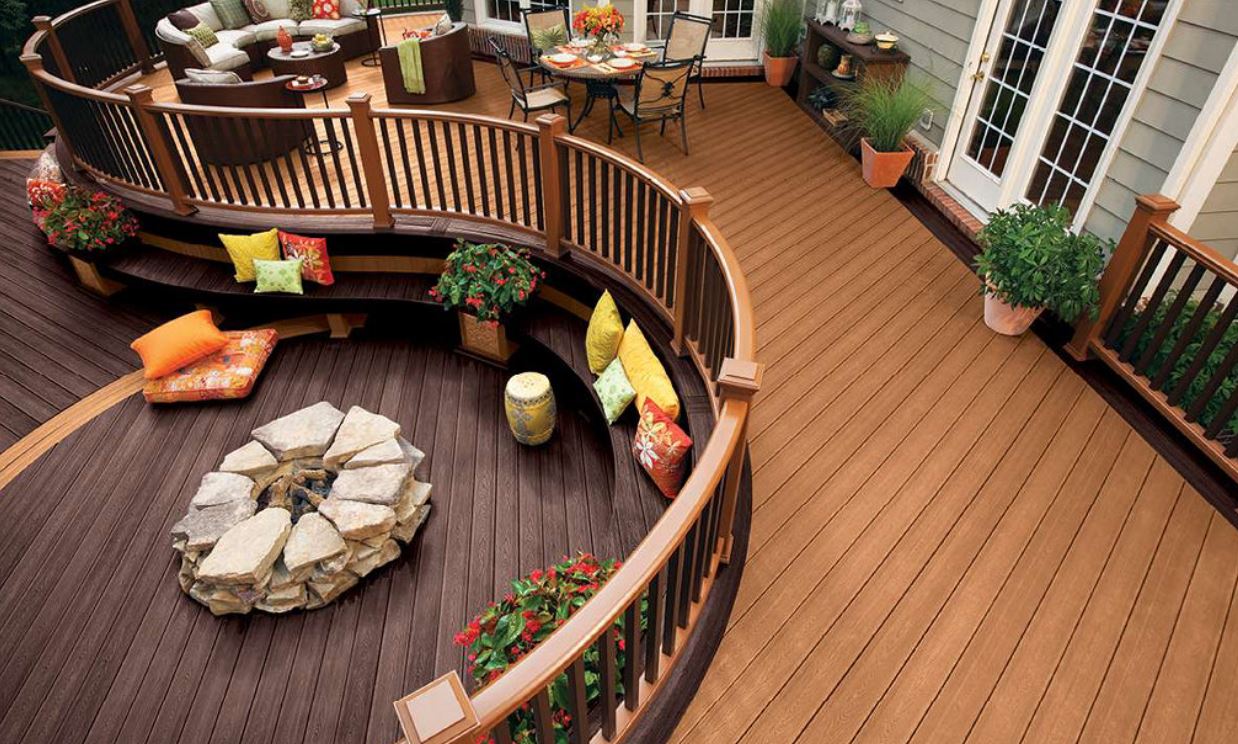
Strategic Color Choice: In the North, darker tones like Trex Transcend Spiced Rum can be a functional advantage. Darker colors absorb solar heat, helping snow and frost melt significantly faster on sunny winter days.

  1. The Southeast & Gulf Coast: Fighting the Humidity War
In states like Florida, Georgia, and Louisiana, the climate acts as a giant petri dish. High humidity, heavy rainfall, and warm temperatures create the perfect environment for organic growth and rapid decomposition.

The Problem: The "Rot and Mold" Gauntlet

In the Southeast, wood decks often succumb to "soft rot" within five to seven years. Constant moisture leads to mold and mildew, which create a biofilm that makes surfaces dangerously slick when wet. Furthermore, subterranean termites in this region view a traditional wood deck as an all-you-can-eat buffet.

The Trex Solution: Biologically Inert Materials

Trex is a composite of recycled plastic and reclaimed wood fibers processed at high heat, rendering the material biologically inert. It is not a food source for termites or carpenter ants. Additionally, the high-performance outer shell is infused with antimicrobial agents that inhibit the growth of mold and mildew.

Design Strategies for the Southeast:

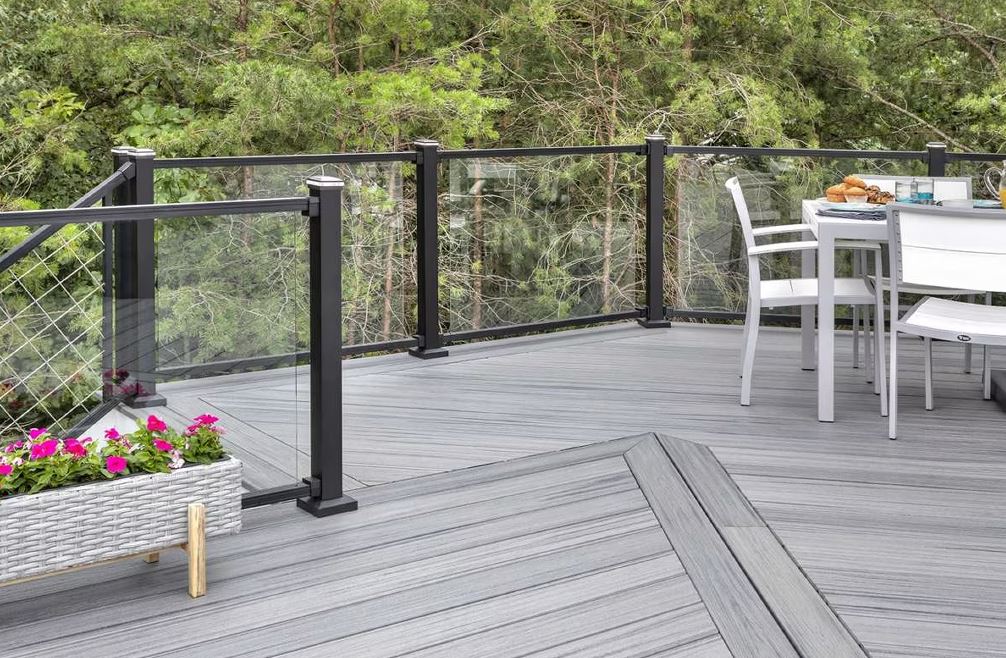
Maximizing Airflow: In humid climates, ventilation is your best defense against stagnant moisture. Design the deck with a slightly higher elevation or utilize open-style railings. For those prioritizing safety and visibility in these conditions, it is helpful to review railing safety standards to ensure your design remains compliant and secure.

Under-Deck Drainage Systems: For second-story decks, systems like Trex RainEscape are a game-changer. By diverting water away from the space below, you prevent the "swamp effect" where moisture gets trapped against the home’s siding.

  1. The Southwest: Surviving the Solar Forge
In the Southwest, the challenge isn't moisture; it's the relentless bombardment of Ultraviolet (UV) radiation and extreme thermal fluctuations.

The Problem: UV Degradation and Thermal Expansion

Intense sun bleaches the lignin in wood, making it brittle and gray within months. Dark surfaces in the desert can reach temperatures exceeding 150°F. Another hidden challenge is the "diurnal temperature swing", the massive difference between midday heat and midnight cool, which causes materials to expand and contract violently.

The Trex Solution: UV Inhibitors and Heat Mitigation

Trex Transcend decking features industrial-grade UV inhibitors to ensure color longevity. To combat the heat, the Trex Transcend Lineage line utilizes heat-mitigating technology that reflects sunlight more effectively, keeping the surface significantly cooler than other man-made materials. This technology is a cornerstone of modern deck designs for homes in any climate, allowing for a seamless transition from your cool interior to your outdoor living space.

Design Strategies for the Southwest:

Integrated Shade Structures: Incorporating a Trex Pergola provides architectural shade that won't warp or crack like wood timbers.

Precision Gapping: To account for daily temperature swings, use Trex’s hidden fastening system. This ensures the boards have the required 1/4-inch gap to expand and contract without warping.

  1. Coastal Regions: The Salt Air Challenge
Whether it’s the Atlantic, Pacific, or the Gulf, salt air is an invisible corrosive agent that aggressively attacks metal fasteners and wood finishes.

The Problem: Galvanic Corrosion and Salt Desiccation

Standard galvanized nails and screws will rust through in coastal environments within a few short years. Salt also pulls moisture out of wood fibers, causing cedar and redwood to "fuzz," splinter, and turn an unattractive gray.

The Trex Solution: Non-Reactive Surfaces

Composite material is naturally resistant to salt spray. Unlike aluminum, which can "pit" if not coated correctly, or wood, which dries out and cracks, the Trex shell is non-reactive. It maintains its color and structural integrity regardless of its proximity to the ocean.

Design Strategies for the Coast:

316-Grade Stainless Steel: This is a non-negotiable requirement for coastal builds. Every fastener, bracket, and railing post should be 316-grade stainless steel to prevent rust.

The Freshwater Rinse: While Trex won't rot, salt crystals can accumulate. A simple freshwater hose-down once a month is usually all that is needed to keep the finish looking brand new.
The Long-Term Value of Weather-Ready Design

Building a deck is a significant investment in your home’s value. However, a deck that warps or splinters after a single season is a poor use of capital. If you are still weighing your options, you might consider comparing decks to patios to see which structure best fits your yard's terrain and maintenance preferences.

By choosing a material like Trex, which is purpose-built to withstand the "four major deck killers", homeowners can break the cycle of annual staining and repair. When you combine high-performance materials with climate-specific design, your deck becomes a true extension of the home that stands defiant against the elements.

Ready to Build Your All-Season Retreat?

Every climate presents a unique set of challenges, but you don't have to navigate them alone. At Arlington & Lumber Company, we specialize in matching the right materials to the specific environmental demands of your backyard.

Whether you are in Arlington, Wilmington, Burlington, Sudbury, or Chelmsford, our experts understand the local Massachusetts climate and how to build for it. Don’t settle for a deck that only lasts a few seasons. Contact Arlington & Lumber Company today to schedule your free consultation and let us help you design a beautiful, low-maintenance outdoor space that will stand the test of time.

TREX Railing in Stock and Available

Shop Now

Shop With Our Popular Categories To Jump-Start Your Projects Today!