

Shop Lead Flashing
1 - 7 of 7 results for Lead Flashing
-
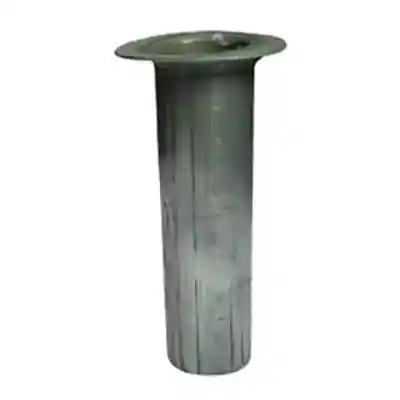
1-1/2" LEAD OUTLET SKU# 44112000 Description: -
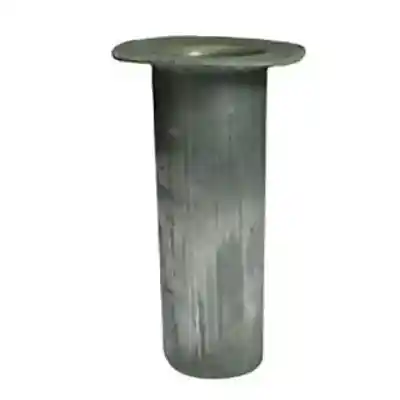
1-3/4" LEAD OUTLET SKU# 44134000 Description: -
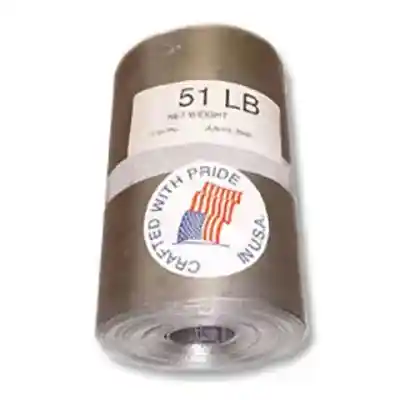
10" SHEET LEAD (LIN. FOOT) APPROX. 24 LF PER ROLL SKU# 44100000 Description: 10L -
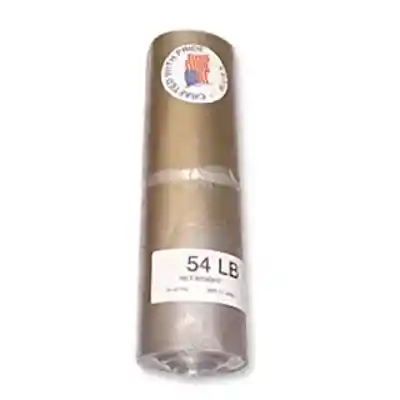
12" SHEET LEAD (LIN. FOOT) APPROX. 20 LF PER ROLL SKU# 44120000 Description: 12L -
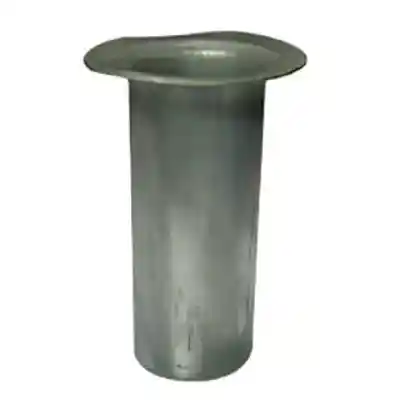
2" LEAD OUTLET SKU# 44200000 Description: -
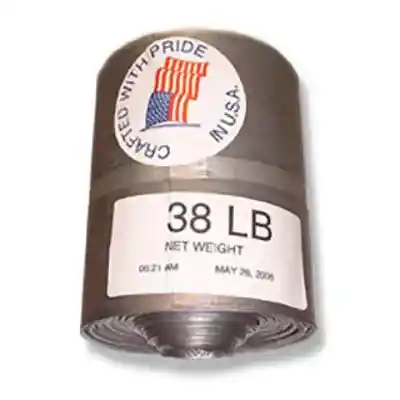
6" SHEET LEAD (LIN. FOOT) APPROX. 32 LF PER ROLL SKU# 44600000 Description: 6L -
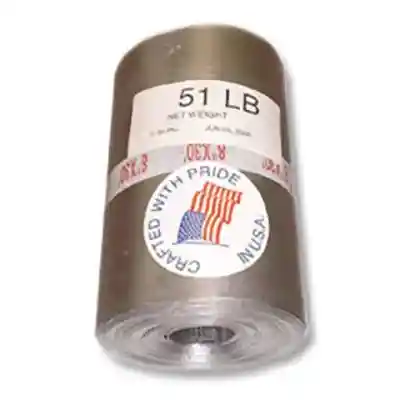
8" SHEET LEAD (LIN. FOOT) APPROX. 30 LF PER ROLL SKU# 44800000 Description: 8L
- Arlington Coal & Lumber Company offers high-quality lead flashing products backed by industry-leading technical expertise and customer service. Sheet lead is a malleable, heavy metal flashing that can be hand-formed around chimneys, dormers, wall abutments, and roof drains to create watertight, long-lasting seals. Arlcoal.com supplies sheet lead for professional roofers, masons, and homeowners. Our inventory features sheet lead in 6-in, 8-in, 10-in, and 12-in widths sold by the linear foot (approximately 32, 30, 24, and 20 linear feet per roll), lead gutter outlets in 1-1/2-in, 1-3/4-in, and 2-in diameters, and lead pipe flashings for 1-1/2-in, 2-in, 3-in, and 4-in plumbing vent stacks.
Roofers, masons, and homeowners across Greater Boston, Massachusetts, New Hampshire, and the surrounding New England region rely on our local lumberyards for weatherization and roofing materials. Order online for convenient job site delivery or counter pickup at any of our regional locations: Arlington Coal and Lumber Company, Burlington Lumber Company, Wilmington Builders Supply, Sudbury Lumber Company, Chelmsford Lumber Company, and Hudson Lumber Company. Browse our online product catalog for available dimensions, contact us for material estimates, or create an account online to manage orders and quotes.
Sheet lead performs exceptionally well as roof flashing due to its high malleability. It can be dressed (formed using wooden or plastic dressing tools) to match the exact profile of slate, tile, brick mortar joints, and irregular surfaces without split seams. Each roll provides roughly 16 to 20 square feet of coverage. Select the width based on the application: narrow 6-in and 8-in strips are ideal for step flashing and counter flashing in brick joints, while 10-in and 12-in widths provide necessary coverage for chimney aprons, back gutters, and deep wall laps. Standard architectural sheet lead is classified by code weight (lb per square foot); confirm your project's specific weight requirements with our counter staff. Pair lead flashing with high-temperature roof underlayment and appropriate masonry sealants. For non-lead applications, explore our flashing products section for copper flashing, flashing tapes, liquid membranes, and aluminum trim coil.
Buyer's guide: Answers to common questions about sheet lead and lead outlets.- Should I use lead, copper, or aluminum flashing? Lead is extremely malleable, making it the preferred choice for dressing around slate, tile, and irregular masonry. Copper provides long-term durability for valley liners and heavy-duty counter flashing, while aluminum offers a cost-effective solution for straight step flashing.
- What weight is this sheet lead, and what do building codes require? Architectural lead is measured by weight in pounds per square foot (e.g., Code 3 is 3-lb/sq-ft; Code 4 is 4-lb/sq-ft). The International Residential Code (IRC) requires roof valley lining lead to weigh a minimum of 2-1/2-lb per square foot. Verify local amendments with your municipal building department in Massachusetts or New Hampshire.
- Which width do I need, and how much coverage is in a roll? Sheet lead is sold by the linear foot in 6-in, 8-in, 10-in, and 12-in widths, with standard rolls measuring approximately 32, 30, 24, and 20 linear feet (yielding 16 to 20 square feet per roll). Use narrower widths for step and counter flashing, and wider rolls for chimney aprons and back gutters. Account for minimum 4-in lap splices in your linear calculations.
- What size lead gutter outlet do I need for a built-in or Yankee gutter? A lead outlet features a drop tube and an integrated flange dressed into the gutter lining. Available in 1-1/2-in, 1-3/4-in, and 2-in outlet sizes, select the largest diameter permitted by your downspout design to maximize drainage capacity and prevent debris clogs.
- Is lead compatible with other metals, and which fasteners should I use? Lead is compatible with copper, zinc, cast iron, and stainless steel without significant galvanic reaction. Avoid direct contact between lead and aluminum in coastal, salt-air environments to prevent accelerated galvanic corrosion. Fasten lead exclusively with copper, brass, or stainless steel nails, screws, and clips—never galvanized steel or aluminum fasteners.
- Can I use sheet lead for chimney step and counter flashing? Yes. Step flashing is woven into shingle or slate courses, while counter flashing inserts at least 1-in into raked mortar joints and is sealed with a lead-compatible sealant. Under IRC regulations, chimneys wider than 30-in require a cricket (saddle) on the upslope side.
- What is the maximum recommended length for an individual piece of lead flashing? Because lead experiences thermal expansion and contraction, individual runs should not exceed 5-ft (1.5 m) in length. Overly long or rigidly fixed sections risk cracking over time. Overlap adjacent sections by at least 4-in.
- What safety precautions should be taken when handling lead flashing? Lead is toxic if ingested or if dust and fumes are inhaled. Always wear protective gloves when handling, refrain from eating or drinking while working, and wash hands thoroughly after installation. Avoid sanding or heating lead, and recycle all offcuts.
- How do I prevent white lead carbonate staining on surrounding masonry? Unfinished lead reacts with rainwater to form white lead carbonate, which can run down onto underlying brick, stone, or slate. Apply a thin coat of patination oil immediately upon installation to promote an even, stable dark gray patina.
- Can sheet lead be used as a shower pan liner? Building codes (such as the IRC and IPC) permit sheet lead shower liners only if the material weighs at least 4-lb per square foot and is isolated from surrounding conductive materials. Verify sheet weight and local plumbing codes prior to installation.
- Chimney flashing assemblies: Install an apron across the front, step flashing up the sides, and a back gutter behind the chimney, dressed tight to the masonry to shed water onto the roof.
- Slate and tile roofing: Form step flashing (soakers) and cover flashing to match the exact contours of slate or tile profiles.
- Dormer and wall abutments: Integrate cover flashing into mortar joints or beneath wall siding where lower roof slopes meet vertical walls.
- Built-in gutters and low-slope drains: Sleeve drop openings with lead outlets to route water cleanly into downspouts without perimeter leakage.
- Historic restoration and repairs: Match existing lead flashing on historic properties to ensure uniform thermal movement and natural weathering.
- Should I use lead, copper, or aluminum flashing? Lead is extremely malleable, making it the preferred choice for dressing around slate, tile, and irregular masonry. Copper provides long-term durability for valley liners and heavy-duty counter flashing, while aluminum offers a cost-effective solution for straight step flashing.
Pack Quantity
The quantity that makes up a standard package.
You must order in units of this quantity.
Items are sold in Gross and Pieces.
Example: Package quantity
- .3333 gross enter .3333
- 10 gross enter 10 or 20, 30 etc.
- 72 pieces enter 72 or 144, 216 etc.
Please note: 1 gross = 144 pieces.
| Pack Quantity | Pieces |
|---|---|
| 0.0208 | 3 |
| 0.0417 | 6 |
| 0.0555 | 8 |
| 0.0625 | 9 |
| 0.0694 | 10 |
| 0.0833 | 12 |
| 0.1041 | 15 |
| 0.1111 | 16 |
| 0.1250 | 18 |
| 0.1389 | 20 |
| 0.1667 | 24 |
| 0.2083 | 30 |
| 0.2222 | 32 |
| 0.2500 | 36 |
| 0.2778 | 40 |
| 0.3333 | 48 |
| 0.4166 | 60 |
| 0.5000 | 72 |
| 0.6667 | 96 |
| 0.7500 | 108 |
| 1.3333 | 192 |
| 1.5000 | 216 |
| 1.6667 | 240 |
