

Shop Stringers
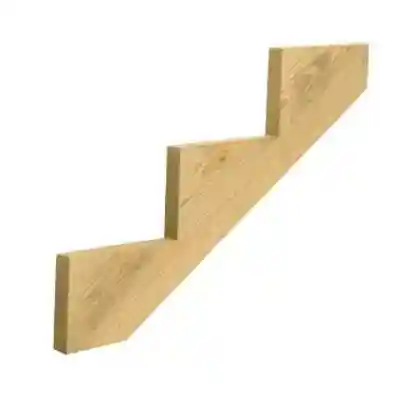
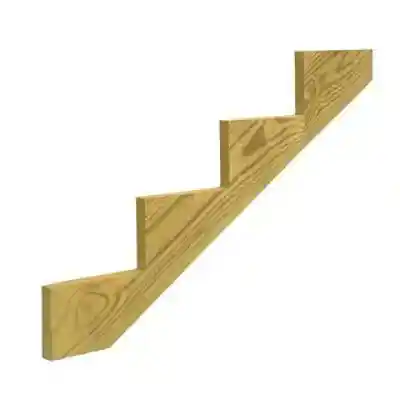
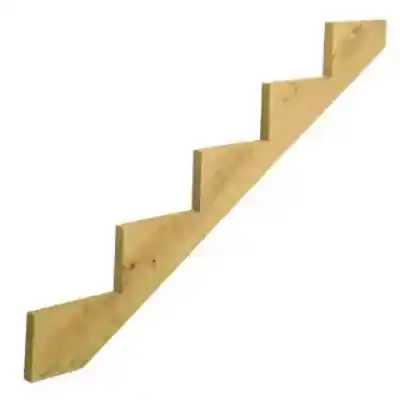
- Enhance the structural integrity of your outdoor decks and indoor stairs with premium stringers for your projects at Arlcoal.com. To help buyers decide on the right fit, it is important to realize that choosing the correct stringers ensures long-term safety and code compliance. Our Stringers and Balusters products are treated to prevent rot and decay. As your trusted local building supply, we serve contractors and DIY enthusiasts throughout Greater Boston, Massachusetts, New Hampshire, and the surrounding New England region. We are your best partner in bringing your dream project to life by providing best material estimates with our friendly locations close to you from Arlington Coal and Lumber Company, Burlington Lumber Company, Wilmington Builders Supply, Sudbury Lumber Company, Chelmsford Lumber Company, and Hudson Lumber Company. Visit Arlcoal.com to view our online product catalog or contact us to visit your favorite local lumberyard today. To streamline your project management, you can create an account online today.
Stringers are the sloped structural beams that support the treads and risers of a staircase. They act as the primary framework, bearing the weight of anyone using the stairs. For outdoor projects in New England, stringers must be made from high-quality pressure-treated lumber to handle constant exposure to moisture and soil. Whether you are using pre-cut 3-step or 5-step stringers for a standard deck or custom-cutting 2-in by 12-in boards for a complex grand staircase, the structural grade of the wood is paramount. A properly installed stringer eliminates "bouncing" or flexing, providing a solid foundation for your stair treads.
Buyers Guide: Building stairs is one of the most technical parts of a deck build. Here are the answers to common questions from our all product categories list to help you build safely:- How many stringers do I need for my deck? For standard wood treads, stringers are typically spaced 16-in on-center. However, if you are using composite decking for your treads, many manufacturers require 12-in on-center spacing to ensure the boards do not sag under weight.
- Can these sit directly on dirt or concrete? While pressure-treated wood is designed for ground contact, it is best practice to rest the bottom of the stringers on a solid concrete pad or a landing. This prevents the stairs from sinking and keeps the wood ends out of standing water.
- What is the standard "Rise and Run"? For residential building codes, the maximum "rise" (height) of a single step is usually 7.75-in, and the minimum "run" (depth) is 10-in. Pre-cut stringers from a local building supply usually feature a 7-in rise and an 11-in run.
- Why is the wood wet, heavy, or slightly warped? Pressure-treated lumber is saturated with liquid preservatives. It is normal for new stringers to be "wet" and heavy. As they dry in the sun, slight warping or "checking" (surface cracks) may occur; this is a natural wood characteristic and typically does not affect the structural rating.
- Do I need to seal the edges I cut? Absolutely. When you notch a stringer, you expose the untreated interior wood. You must apply a brush-on end-cut wood preservative to every cut surface to prevent internal rot and maintain the wood's integrity.
- When can I paint or stain them? You must wait until the wood is completely dry. A simple test is to sprinkle water on the stringer; if the water soaks in, it is ready for stain. If it beads up, the wood is still too wet. This usually takes 2 to 4 weeks of dry weather.
- Do I need a concrete pad at the bottom? Yes. A concrete landing provides a level, non-shifting base. Without a pad, the weight of the stairs can cause the stringers to sink into the soil over time, pulling the top of the stairs away from the deck.
- How do I attach the stringer to the deck? You should use approved metal sloped hangers or a 2-in by 4-in pressure-treated "nailer" board. Nailing through the end grain of the stringer is not considered a strong enough connection for long-term safety.
We offer a wide selection of quality Pressure Treated products to complete your build. Our Dimensional lumber inventory includes Treated Decking for treads, Treated Framing for the deck structure, and Treated Posts for vertical support.
For sheeting and aesthetic finishing, explore our Plywood and Lattice, including moisture-resistant Treated Plywood. To finish your staircase safety system, check our Stringers and Balusters section for high-quality Balusters and robust Stringers. As your one-stop shop, you can also shop with all our building products in-stock from Building Materials, Fasteners, Hardware, Lumber, Composites, and Plywood, to Moulding and Millwork. Visit one of our six locations or explore more products online today to find everything you need for a professional-grade build. - How many stringers do I need for my deck? For standard wood treads, stringers are typically spaced 16-in on-center. However, if you are using composite decking for your treads, many manufacturers require 12-in on-center spacing to ensure the boards do not sag under weight.
Pack Quantity
The quantity that makes up a standard package.
You must order in units of this quantity.
Items are sold in Gross and Pieces.
Example: Package quantity
- .3333 gross enter .3333
- 10 gross enter 10 or 20, 30 etc.
- 72 pieces enter 72 or 144, 216 etc.
Please note: 1 gross = 144 pieces.
| Pack Quantity | Pieces |
|---|---|
| 0.0208 | 3 |
| 0.0417 | 6 |
| 0.0555 | 8 |
| 0.0625 | 9 |
| 0.0694 | 10 |
| 0.0833 | 12 |
| 0.1041 | 15 |
| 0.1111 | 16 |
| 0.1250 | 18 |
| 0.1389 | 20 |
| 0.1667 | 24 |
| 0.2083 | 30 |
| 0.2222 | 32 |
| 0.2500 | 36 |
| 0.2778 | 40 |
| 0.3333 | 48 |
| 0.4166 | 60 |
| 0.5000 | 72 |
| 0.6667 | 96 |
| 0.7500 | 108 |
| 1.3333 | 192 |
| 1.5000 | 216 |
| 1.6667 | 240 |
