Are you ready to transform your entryway? Installing new
treads and risers is one of the most effective ways to upgrade your interior design while increasing home value. As a leading
local building supply store,
Arlington Coal and Lumber provides the guidance and high-quality
stair parts millwork and moulding you need to achieve a custom look. We are your best partner in bringing your dream project to life by providing best material estimates with our friendly locations close to you from
Arlington Coal and Lumber Company,
Burlington Lumber Company,
Wilmington Builders Supply,
Sudbury Lumber Company,
Chelmsford Lumber Company, and
Hudson Lumber Company. Explore our
online product catalog and
contact us today to start your next stair renovation in the Greater Boston, Massachusetts, New Hampshire, and the surrounding New England region. If you are ready to begin,
create an account online to manage your orders efficiently.
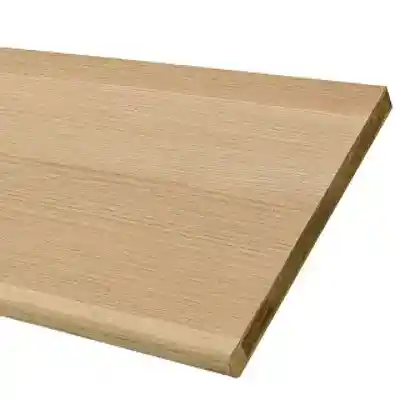
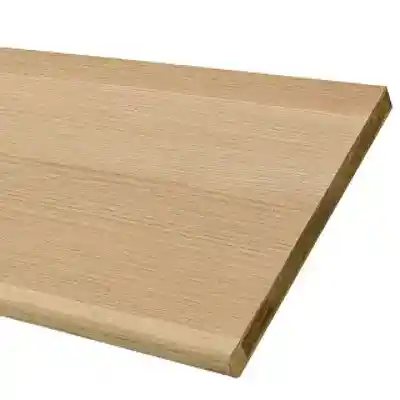
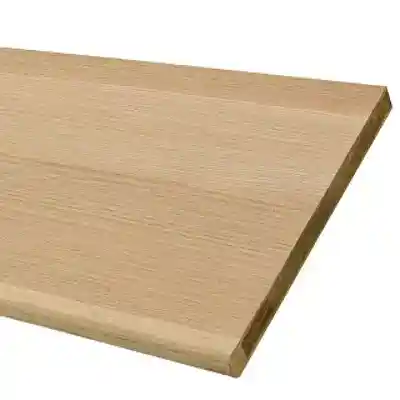
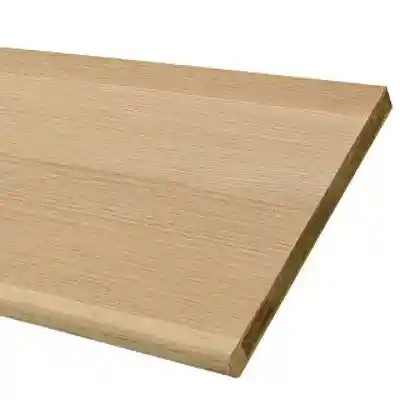
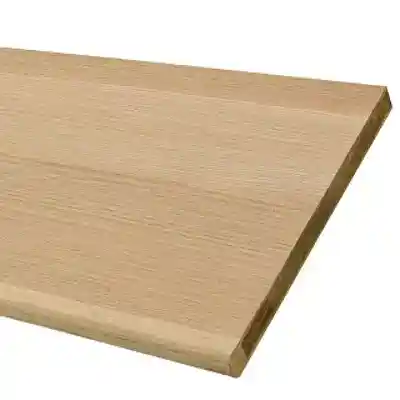
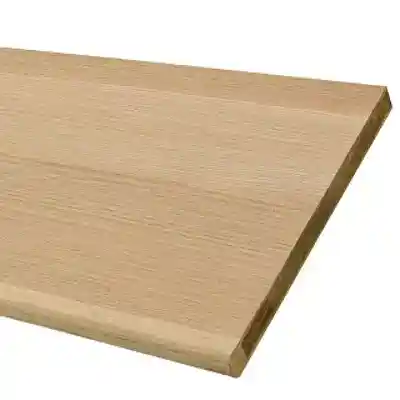
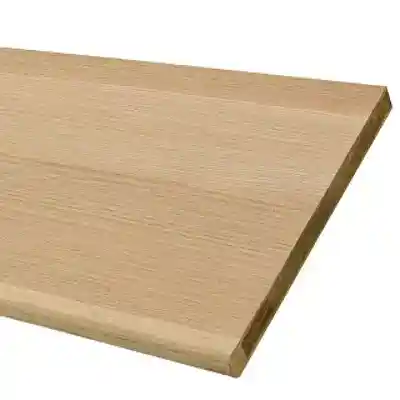
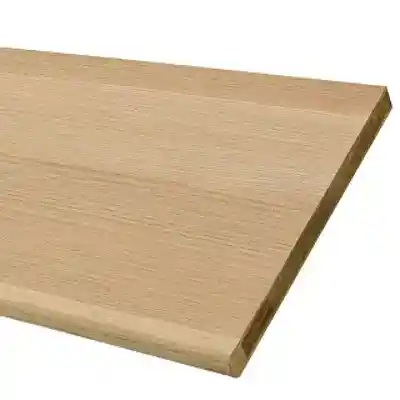
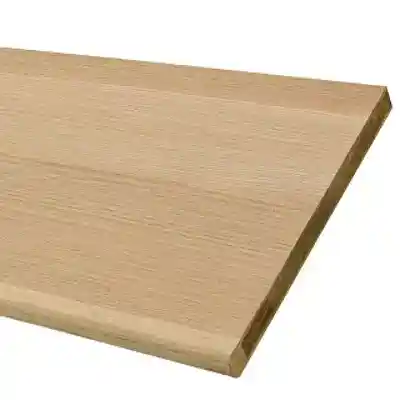
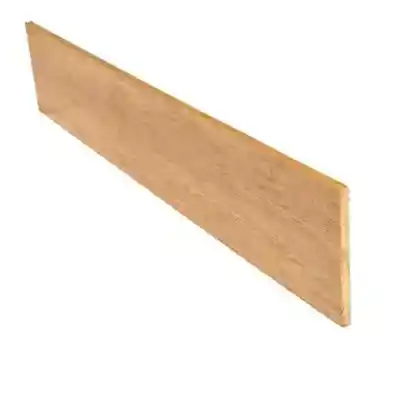
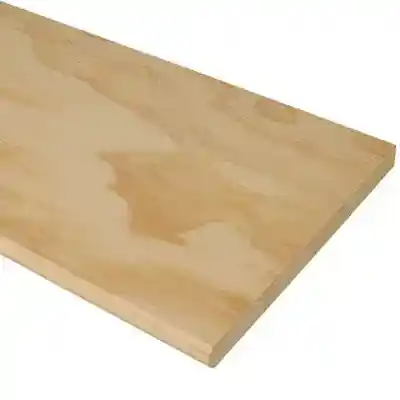
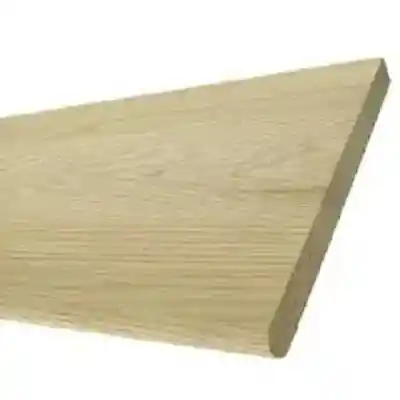
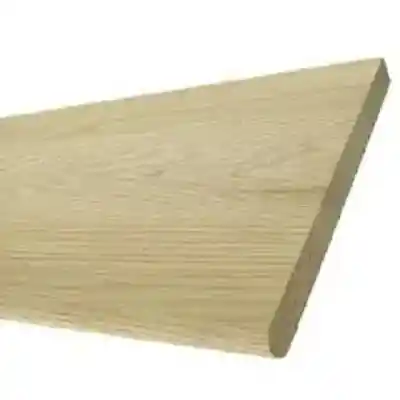
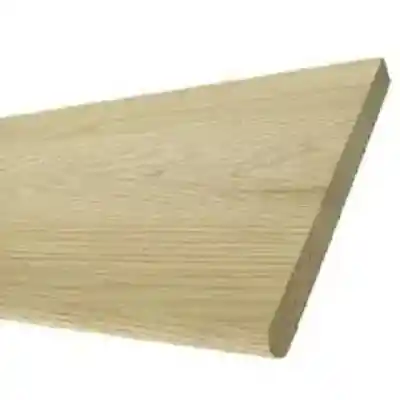
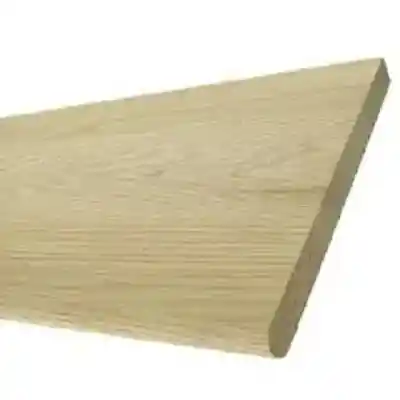
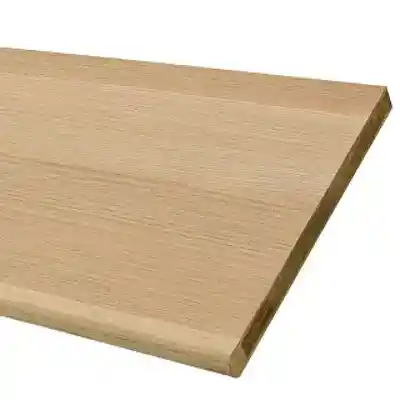
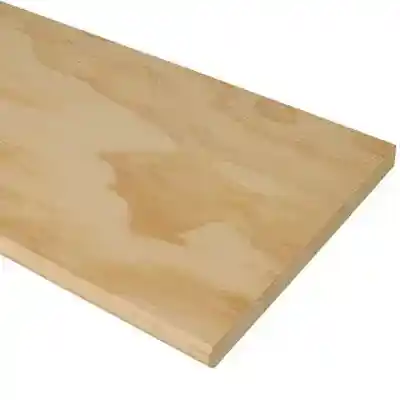
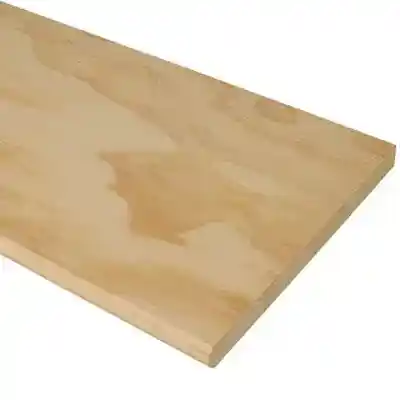
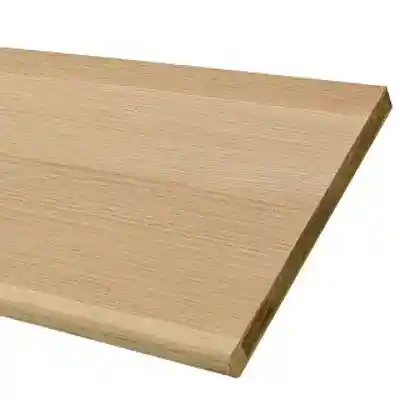
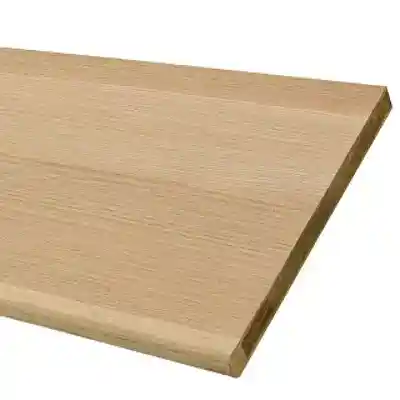
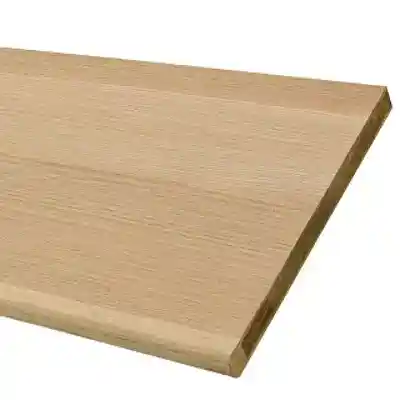
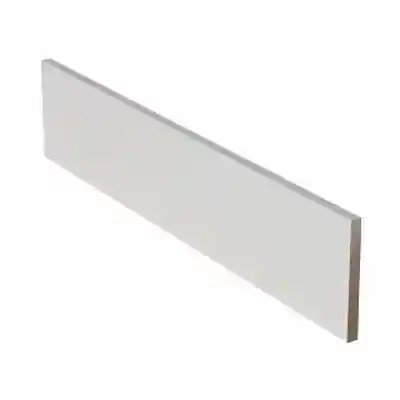
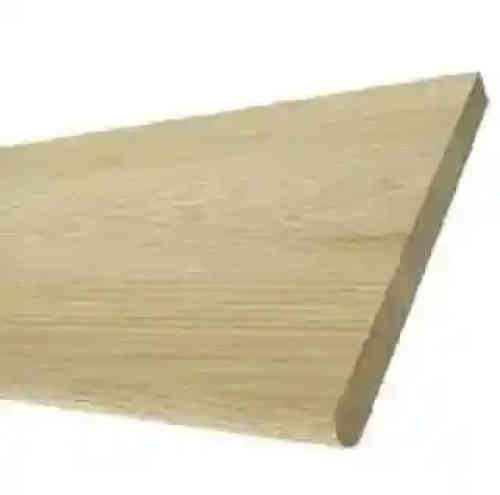
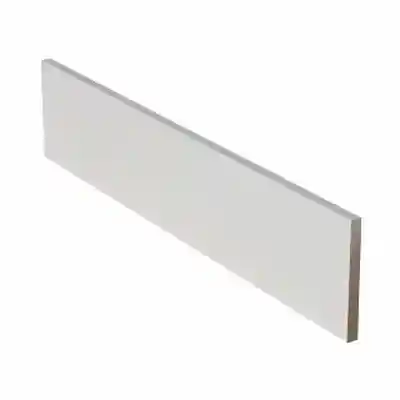
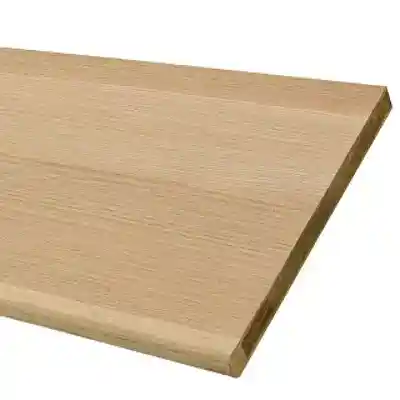
Stair treads and risers are the fundamental components of any staircase. The tread is the horizontal surface you step on, while the riser is the vertical board that closes the gap between each step. Together, they define the structural integrity and aesthetic tone of your home. Choosing the right species, such as oak or pine, and ensuring the correct thickness not only enhances the safety of your staircase but also improves its durability under daily foot traffic. Whether you prefer a classic, uniform look or a custom-built staircase with decorative returns, selecting the proper materials is the first step toward a beautiful, long-lasting renovation.
Buyers Guide: To help you decide on the best materials for your project, we have compiled answers to the most common questions our team receives:
- What is the difference between treads and risers? A tread is the horizontal part you walk on, and a riser is the vertical board between each tread.
- What are the standard dimensions? A standard tread is typically 10-in to 11-in deep, while a riser is usually 7-in to 7-1/2-in high.
- Which goes in first, treads or risers? Standard practice is to install risers first, followed by the treads, to ensure a tight, overlapping fit.
- What are the best materials? Hardwoods like Red Oak and White Oak are industry standards for durability and finish, while finger-jointed pine is ideal for painted applications.
- Can I use an open riser design? Yes, open riser staircases provide a modern, airy feel, though you must ensure they meet local building codes regarding gap spacing for safety.
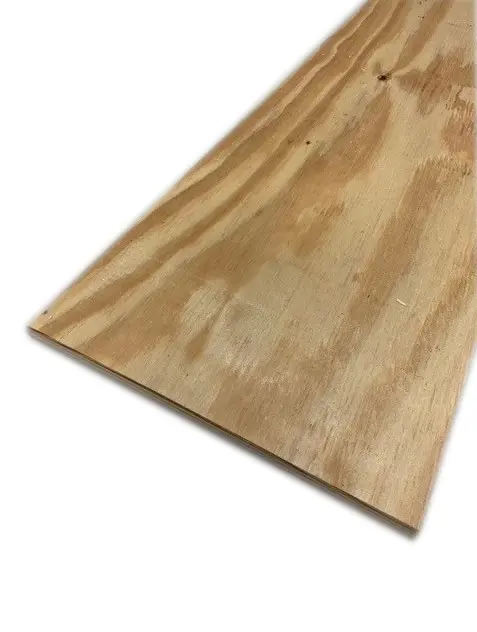
- Red Oak vs. White Oak vs. Southern Yellow Pine (SYP)? Red Oak is highly popular for its grain and stainability. White Oak is denser and more water-resistant. SYP is an economical choice, often used for its rugged strength, though it has a more pronounced grain than oaks.
- Can I paint the grooved FJ Pine/Poplar risers? Yes, these are designed to be painted. The grooves are intended to provide a key for adhesives or to assist in stability, not to be left unfinished.
- 1-1/16-in vs. 3/4-in tread thickness? Use 1-1/16-in heavy-duty treads for high-traffic areas or where extra structural support is required. 3/4-in treads are standard for most residential staircases.
- 10-1/2-in vs. 11-1/2-in tread depth?Choose the depth that matches your existing stringer cuts. If you are re-treading, measure your current treads to ensure the new ones provide adequate coverage.
- Sizing for a 36-in wide staircase?Always buy a wider size, such as 42-in, and trim it to fit. This allows you to achieve a perfect, gap-free fit against your stringers.
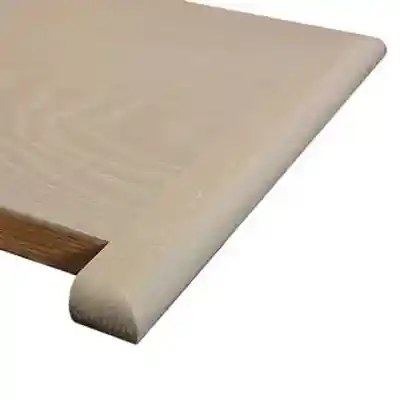
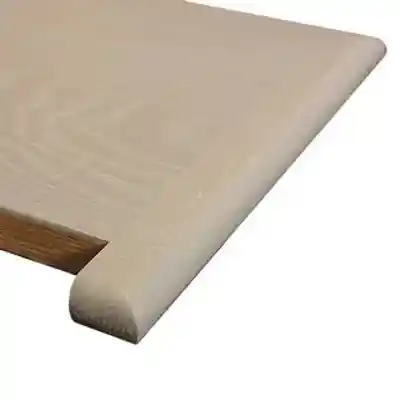
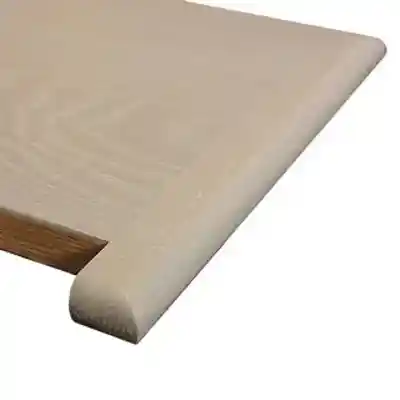
- What is a mitered reversible tread? It allows the tread to be installed with a return on either the left or right side, providing flexibility for staircases exposed on one side.
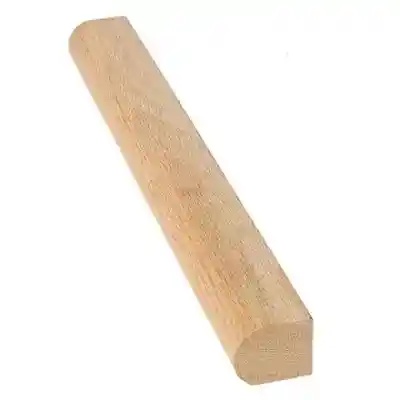
- Do I need to buy the return piece separately? Yes, if you are working with mitered treads, the return piece must be purchased separately to finish the exposed edge.
- What does the grooved feature on risers do? It provides structural stability and allows for easier attachment to the sub-riser or stringer.
- Why is Poplar sold by the linear foot (LF)? It is often sold as a raw material for custom installations where exact pre-cut lengths may not suffice.
- What is a 27-1/2-in X 60-in stair blank used for? These are large format pieces used for custom landing platforms where standard treads are too narrow.
- Plywood vs. solid wood treads? Plywood is best for carpeted stairs where the surface will not be visible. Solid wood is required for any staircase intended to be stained or painted as a finished surface.
Creative Design Ideas and Applications
- Mixed Material Staircases: Combine dark stained oak treads with white painted risers for a timeless, high-contrast look that works in almost any interior style.
- Modern Floating Stairs: Use heavy-duty treads without risers to create an open, architectural staircase that lets light travel through the house.
- Decorative Returns: For a luxury feel, use treads with pre-mitered returns to wrap the wood around the side of the staircase, hiding the raw edges of the stringer.
- Custom Landings: Use large stair blanks to create seamless landing areas that match your stair treads, providing a high-end, custom-built appearance.
We also offer a wide selection of quality
moulding and millwork products to support your build. Our inventory includes
doors, such as
cellar doors and
sill pans and weatherstrip, alongside a vast array of
moulding (including
mdf moulding,
pfj pine moulding, and
pine moulding). For structural character, explore our
posts and columns, including
fiberglass columns. If you are renovating your stairs, our dedicated
stair parts section includes
balusters,
handrails,
oak thresholds,
stair hardware, and
treads and risers.
We also stock
windows, including
Andersen windows like
casement windows and
double-hung windows, as well as
Mathews Brothers products. For lighting, we offer
Velux skylights, including
fixed skylights,
flashing kits,
skylight accessories, and
vented skylights.
You can also shop with our complete building products in-stock from
building materials,
fasteners,
hardware, and
lumber, composites, and plywood. Explore
all product categories online today to find everything you need at your preferred
local lumberyard.